
Why Cyber Insurance Trends Matter in 2026
The rising cost and complexity of ransomware, AI-driven attacks, and systemic technology failures are changing the insurance industry. Cyber Insurance Trends in 2026 show that companies can no longer treat cyber insurance as a simple financial safety net. Insurers increasingly want evidence that organizations have strong security controls, tested recovery systems, and a clear understanding of their digital risks. Current underwriting discussions commonly focus on controls such as multi-factor authentication, endpoint detection, backups, vulnerability management, and incident response.
At the same time, emerging risks such as AI attacks, supply-chain dependencies, state-backed cyber operations, and post-quantum cryptography are forcing insurers to rethink how cyber risk is measured. This is creating a new insurance environment where technical security and insurance eligibility are becoming closely connected.
Table of Contents
- Cyber Insurance Trends and Technical Underwriting
- Cyber Insurance Trends and Ransomware Risk
- Cyber Insurance Trends and Zero-Trust Security
- Cyber Insurance Trends and AI-Driven Attacks
- Cyber Insurance Trends and Quantum Readiness
- Cyber Insurance Trends and Cyber War Exclusions
- Cyber Insurance Trends and Captive Insurance
- Cyber Insurance Trends and the Future of Cyber Risk
- Conclusion
Cyber Insurance Trends and Technical Underwriting

One of the biggest Cyber Insurance Trends in 2026 is the movement from questionnaire-based underwriting toward evidence-based technical assessment. In previous years, organizations could often answer questions about their security programs and continue through the application process. Today, insurers increasingly want evidence showing that important controls are actually deployed and operating.
Multi-factor authentication, endpoint detection and response, tested backups, vulnerability management, and incident response planning have become important parts of the underwriting conversation. Some insurers and brokers report asking for screenshots, reports, configuration evidence, and recovery-test documentation rather than simply accepting a “yes” answer.
This means cybersecurity teams and insurance teams are becoming more connected. A company may have a strong security program, but if it cannot demonstrate that the controls work, the insurance application can become more difficult.
Cyber Insurance Trends and Ransomware Risk
Ransomware remains one of the major forces behind changing Cyber Insurance Trends. The insurance industry has learned that ransomware can create simultaneous costs involving business interruption, data recovery, legal expenses, incident response, and sometimes extortion.
Because of this, insurers are paying close attention to the controls that can reduce ransomware impact. Strong authentication, network segmentation, endpoint monitoring, offline or immutable backups, and tested incident-response procedures are increasingly important during underwriting.
The important change is that insurance is increasingly connected to prevention. Instead of simply asking how much coverage a company wants, insurers are also examining how the company could prevent or limit a major loss.
Cyber Insurance Trends and Ransomware Coverage
The structure of ransomware coverage can also vary between policies. A company may have cyber insurance but still face sublimits, exclusions, coinsurance provisions, or specific conditions related to ransomware.
That makes policy wording especially important. Businesses need to understand not only the headline coverage limit but also what conditions must be satisfied before a claim is paid.
Cyber Insurance Trends and Zero-Trust Security
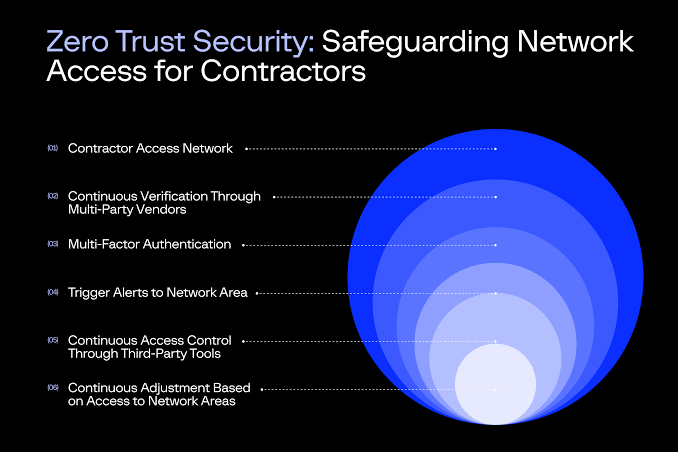
Zero-Trust architecture is another important area within Cyber Insurance Trends. The basic idea of Zero Trust is that users, devices, and applications should not automatically receive trust simply because they are inside a corporate network.
From an insurance perspective, this approach can support stronger identity management and access control. Limiting unnecessary privileges can reduce the potential impact of stolen credentials and compromised accounts.
Zero Trust is not a universal requirement for every cyber insurance policy, but its underlying security principles overlap with controls that insurers increasingly examine, particularly MFA, privileged-access protection, identity controls, and remote-access security.
Cyber Insurance Trends and AI-Driven Attacks
Artificial intelligence is creating a new category of uncertainty for Cyber Insurance Trends. Attackers can use AI to automate phishing, generate convincing social-engineering content, analyze targets, and potentially accelerate parts of an intrusion.
At the same time, organizations are deploying AI systems that can make decisions or perform actions without continuous human intervention. This creates difficult insurance questions because traditional cyber policies were designed around concepts such as unauthorized access, data breaches, and ransomware.
Recent industry reporting shows insurers are already examining how AI-related incidents fit into existing policy definitions and whether specialized coverage or exclusions may be needed.
This does not mean every AI incident will be excluded. Instead, the market is still developing language for determining when an AI failure becomes a cyber incident, technology failure, liability event, or another type of loss.
Cyber Insurance Trends and Quantum Readiness
Post-quantum security is becoming an emerging topic in Cyber Insurance Trends, but it should be described carefully. There is not currently a universal market-wide rule requiring every company to prove “quantum readiness” before receiving cyber insurance.
The concern comes from the possibility that future quantum computers could break some currently used public-key cryptographic systems. Organizations with sensitive information that must remain confidential for many years may therefore be interested in migration toward post-quantum cryptography.
In 2026, specialist discussions are beginning to connect post-quantum readiness with risk assessments and insurance conversations, particularly for organizations with long-lived sensitive data. However, current industry analysis also notes that quantum risk has not yet produced the same kind of loss-driven underwriting requirements seen with ransomware.
Cyber Insurance Trends and Post-Quantum Planning
A practical post-quantum strategy can begin with understanding where vulnerable cryptography is being used. Organizations can then create inventories of important certificates, encryption systems, applications, and sensitive data.
This type of preparation may become more important as the insurance industry gains more information about future quantum-related risks.
Cyber Insurance Trends and Cyber War Exclusions
Cyber war exclusions are another major part of Cyber Insurance Trends in 2026. Modern cyber policies increasingly distinguish between ordinary criminal attacks and cyber operations connected to armed conflict or state-sponsored activity.
Lloyd’s and the wider insurance market have developed more specific approaches to state-backed cyberattack and war-related exclusions. The exact wording matters because attribution, geographic location, connection to armed conflict, and the nature of the attack can affect whether an exclusion applies.
This does not mean that every attack associated with a nation-state is automatically outside coverage. Current explanations of cyber war exclusions emphasize that policy wording and the circumstances of the incident are important.
Cyber Insurance Trends and State-Sponsored Attacks
State attribution can be particularly difficult because attackers may use criminal groups, compromised infrastructure, proxy organizations, or other methods that make responsibility difficult to establish.
For companies, this creates an important policy-review issue: understanding exactly how the policy defines war, state-backed attacks, attribution, and related exclusions.
Cyber Insurance Trends and Captive Insurance
Captive insurance represents another interesting development within Cyber Insurance Trends. A captive is an insurance company created or controlled by an organization or group to finance its own risks.
Large technology companies and other organizations with significant cyber exposure may consider captive structures when commercial insurance becomes expensive, limited, or difficult to customize. A captive does not eliminate cyber risk. Instead, it changes how the organization finances and manages that risk.
For very large organizations, captive arrangements can potentially work alongside commercial insurance, risk retention, and other forms of protection. However, they also require substantial financial, regulatory, actuarial, and governance planning.
Cyber Insurance Trends: Comparing the Major Changes
| Cyber Insurance Trend | Main Risk | What Insurers May Examine |
|---|---|---|
| Technical Underwriting | Weak security controls | MFA, EDR, backups and response |
| Ransomware Risk | Business interruption | Recovery and ransomware controls |
| Zero Trust | Credential compromise | Identity and access controls |
| AI Attacks | New attack methods | AI exposure and policy wording |
| Quantum Risk | Future cryptographic threats | Cryptography inventory and planning |
| Cyber War | State-linked attacks | War and attribution clauses |
| Captive Insurance | High insurance costs | Internal risk-financing strategy |
This comparison shows why Cyber Insurance Trends are moving beyond traditional insurance questions. The market increasingly connects financial protection with technical resilience.
Cyber Insurance Trends and the Future of Cyber Risk
The future of Cyber Insurance Trends will likely depend on how quickly insurers can collect reliable data about emerging threats. Ransomware has generated years of claims data, making it easier for insurers to understand certain risks. AI attacks, autonomous systems, and quantum-related threats have much less historical data.
This creates a difficult pricing environment. Insurers must estimate risks that may change faster than traditional actuarial models can handle.
The result may be more specialized policies, clearer exclusions, tighter underwriting requirements, and greater cooperation between insurers, cybersecurity providers, brokers, and technology companies.
Companies that maintain accurate security documentation may also have an advantage during the insurance process because they can demonstrate how their controls operate rather than simply describing their security strategy.
Conclusion: Cyber Insurance Trends Are Becoming More Technical
The biggest lesson from Cyber Insurance Trends in 2026 is that cyber insurance is becoming closely connected to cybersecurity itself. Ransomware has pushed insurers toward stronger technical underwriting, while AI, state-sponsored attacks, Zero Trust, and emerging quantum risks are creating new questions about how digital risk should be measured.
Cyber insurance should therefore be viewed as one part of a wider risk-management strategy rather than a replacement for strong security. Organizations that understand their systems, document their controls, test their recovery plans, and carefully review exclusions can better understand what their insurance actually provides.
As digital threats continue to evolve, the relationship between cybersecurity and insurance will likely become even stronger. The companies that prepare for both technical risk and insurance requirements will be better positioned to understand their exposure in an increasingly complicated digital environment.
 administratoir16