
Shape-Shifting Materials are opening a new direction in product design by allowing physical objects to change their form, structure, or properties in response to heat, electricity, pressure, light, magnetic fields, or other environmental conditions. Instead of building products that always remain rigid and fixed, researchers are developing materials that can dynamically adapt to different situations.
From flexible electronics and medical devices to automotive components and smart architecture, Shape-Shifting Materials could make future products more adaptable, compact, and efficient. These materials are still developing, but their potential applications are attracting significant interest across engineering, manufacturing, robotics, and consumer technology.
Table of Contents
- What Are Shape-Shifting Materials?
- Shape Memory Alloys
- Shape Memory Polymers
- Electroactive Materials
- Thermally Responsive Materials
- Magnetically Responsive Materials
- Hydrogels
- Liquid Crystal Elastomers
- Origami-Inspired Materials
- Programmable Materials
- The Future of Shape-Shifting Materials
What Are Shape-Shifting Materials?

Shape-Shifting Materials are materials capable of changing their physical form when exposed to specific triggers. Unlike conventional materials that maintain approximately the same shape throughout their use, these advanced materials can bend, expand, contract, twist, fold, or otherwise transform.
The trigger behind the transformation depends on the material. Some respond to temperature, while others react to electrical signals, magnetic fields, moisture, pressure, or light.
This ability could allow designers to create products that perform multiple functions without requiring complicated mechanical systems.
1. Shape Memory Alloys
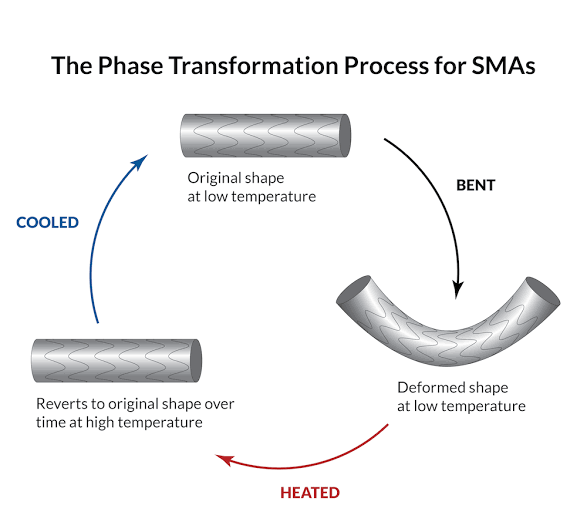
Shape memory alloys are among the best-known examples of Shape-Shifting Materials. These metals can be deformed and later return toward a previously programmed shape when exposed to an appropriate temperature.
One common example is nickel-titanium, often known as nitinol. Its ability to change shape makes it useful in areas such as medical devices, actuators, aerospace components, and specialized engineering systems.
Instead of relying entirely on motors or mechanical hinges, designers can potentially use the material itself to create movement.
Why Shape-Shifting Materials Matter in Metal Design
Traditional metal components are usually designed to remain rigid. Shape memory alloys introduce another possibility: a metal component can become an active part of a product’s movement system.
This could help reduce the number of mechanical components required in certain designs and potentially create smaller or lighter systems.
2. Shape Memory Polymers
Shape memory polymers are another important category of Shape-Shifting Materials. These lightweight materials can temporarily hold one shape and later return toward a programmed form after receiving an appropriate stimulus.
Compared with many metal-based systems, polymers can offer advantages such as low weight, flexibility, and easier manufacturing for certain applications.
Researchers are exploring these materials for medical devices, packaging, aerospace applications, smart textiles, and adaptive products.
Flexible Products With Shape-Shifting Materials
Imagine packaging that changes its structure after being exposed to heat or a medical device that changes form after entering the body. These concepts demonstrate why shape memory polymers are attracting interest.
Their flexibility could allow products to be designed around changing conditions rather than a single fixed shape.
3. Electroactive Materials
Some Shape-Shifting Materials respond to electricity. Electroactive materials can deform, contract, expand, or change other physical properties when an electrical signal is applied.
This behavior makes them interesting for soft actuators, haptic systems, adaptive surfaces, wearable technology, and robotics.
Because electrical signals can be controlled electronically, these materials may allow designers to create precise and programmable movements.
Smarter Electronic Products
Electroactive materials could eventually allow devices to physically respond to software commands. Instead of simply displaying information, a device could potentially change its physical structure depending on what the user needs.
This creates a bridge between digital intelligence and physical product design.
4. Thermally Responsive Materials
Temperature can also be used as a trigger for Shape-Shifting Materials. Thermally responsive materials can change their structure when heated or cooled.
This approach can be useful when designers want a product to respond automatically to environmental conditions without requiring complex electronics.
For example, temperature-responsive components could potentially open, close, bend, or adjust airflow depending on surrounding temperatures.
Automatic Environmental Response
Products made with thermally responsive materials could react to their surroundings without requiring continuous human control.
This concept could be particularly useful in architecture, ventilation, electronics cooling, and other systems where environmental conditions constantly change.
5. Magnetically Responsive Materials
Magnetic fields provide another method for controlling Shape-Shifting Materials. Certain materials can move, deform, or rearrange themselves when exposed to magnetic forces.
Magnetic control can be especially interesting for applications where direct mechanical access is difficult.
Researchers are investigating magnetically responsive materials for soft robotics, biomedical systems, microdevices, and adaptive structures.
Shape Control Without Traditional Motors
A major advantage of magnetic actuation is that movement can potentially be controlled remotely. This could help engineers create small systems where conventional motors would be too large or complicated.
In the future, this approach may contribute to new types of miniature medical and robotic devices.
6. Hydrogels
Hydrogels contain large amounts of water and can respond to environmental changes by swelling, shrinking, or changing their structure. Their soft and flexible nature makes them another fascinating category of Shape-Shifting Materials.
Researchers are exploring responsive hydrogels for drug delivery, biomedical applications, artificial muscles, sensors, and soft robotics.
Responsive Materials for Healthcare
The ability of hydrogels to change their physical behavior in response to their surroundings could be valuable in medical applications. A material could potentially respond to changes in temperature, chemical conditions, or other biological signals.
This could lead to more adaptive medical technologies as research progresses.
7. Liquid Crystal Elastomers
Liquid crystal elastomers combine flexible polymer networks with liquid-crystal behavior. Under certain stimuli, these materials can change shape and produce controlled movement.
They are being studied as potential artificial muscles and soft actuators.
Unlike conventional rigid mechanical components, these materials can produce movement through changes within their structure.
Shape-Shifting Materials Inspired by Biology
Liquid crystal elastomers are particularly interesting because their movement can resemble biological systems. Muscles, for example, create movement through controlled contraction.
Researchers are investigating whether similar principles can be used to build soft machines and adaptive devices.
8. Origami-Inspired Materials
Origami-inspired engineering uses folding principles to create structures that can transform between compact and expanded forms. While origami itself is not a material, combining folding geometry with advanced materials creates another interesting direction for Shape-Shifting Materials.
These designs can potentially be folded into small spaces and later expanded when needed.
Compact Designs With Adaptive Structures
Space technology is one area where transforming structures can be valuable. A component may need to remain compact during transportation and then expand after reaching its destination.
Similar concepts could potentially be applied to medical devices, deployable shelters, electronics, and transportation systems.
9. Programmable Materials
Programmable materials take the concept even further by allowing engineers to design materials with specific transformation behaviors.
Instead of creating a product that simply bends once, researchers can explore structures capable of performing different transformations depending on the stimulus they receive.
This could eventually allow a single material system to perform multiple functions.
From Fixed Products to Adaptive Products
Traditional product design often focuses on creating a fixed physical structure. Programmable materials could change that approach by allowing the product itself to adapt.
A future device might change its shape depending on temperature, user interaction, environmental conditions, or software instructions.
10. Multi-Responsive Shape-Shifting Materials
The most advanced Shape-Shifting Materials may eventually respond to multiple stimuli rather than just one. A material could potentially react differently to heat, electricity, light, pressure, or magnetic fields.
Multi-responsive systems could provide designers with greater control over how products transform.
The Future of Adaptive Product Design
If these technologies continue to improve, designers could create products that do not have one permanent physical configuration. Instead, the same product could adapt its structure according to different situations.
This could influence everything from consumer electronics and furniture to vehicles, medical equipment, and industrial machines.
The Future of Shape-Shifting Materials
The future of Shape-Shifting Materials could change the way engineers think about physical products. Instead of treating materials as passive components, designers may increasingly use them as active parts of a product’s functionality.
A smartphone could eventually include surfaces that physically change depending on the task. A vehicle component could adapt to changing conditions. Medical devices could transform inside the body, while buildings could respond automatically to environmental changes.
However, challenges remain. Manufacturing costs, durability, energy requirements, precise control, scalability, and long-term reliability still need to be addressed for many applications.
Conclusion
Shape-Shifting Materials represent an exciting direction in advanced product design because they can transform the physical behavior of objects. Shape memory alloys, responsive polymers, electroactive materials, hydrogels, magnetic materials, liquid crystal elastomers, and programmable structures all demonstrate different approaches to creating adaptive products.
As research continues, these materials could help move product design away from rigid and fixed structures toward systems that respond intelligently to their surroundings. The result could be lighter, more flexible, and more adaptable products designed for a world where technology increasingly needs to respond to changing conditions.