
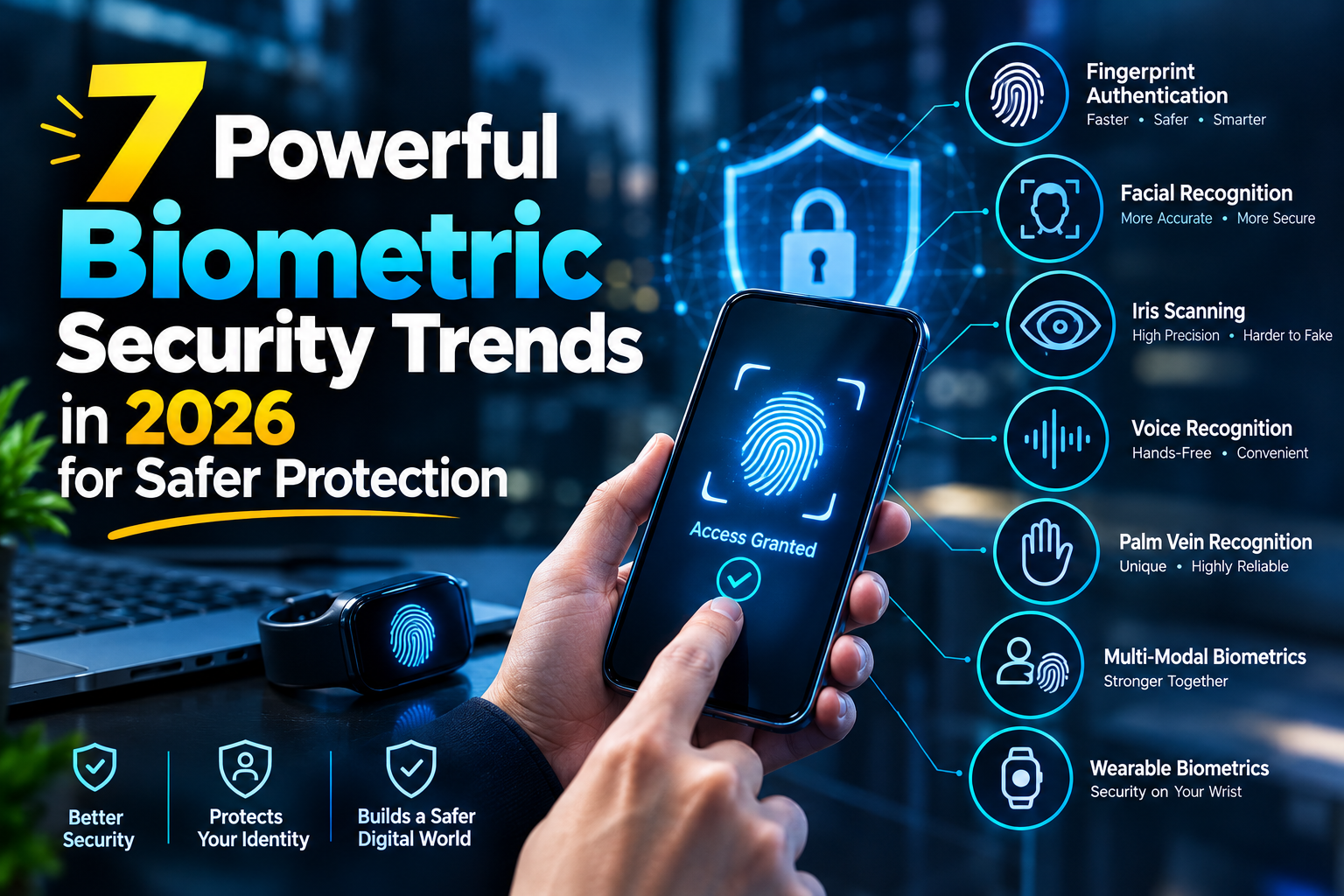
Biometric Security Trends are changing rapidly in 2026 as traditional fingerprints, facial recognition, and voice authentication face new challenges from artificial intelligence and increasingly sophisticated spoofing techniques. Biometrics are convenient because they connect authentication to physical characteristics, but unlike passwords, biometric characteristics cannot simply be replaced when compromised. This has pushed the industry toward stronger approaches such as liveness detection, multimodal authentication, behavioral signals, and continuous identity verification.
For years, fingerprints and face scans were presented as highly secure alternatives to passwords. However, modern security research increasingly focuses on the difference between recognizing a biometric pattern and proving that a real person is physically present. This distinction is becoming one of the most important Biometric Security Trends in modern authentication.
Table of Contents
- Why Biometric Security Trends Are Changing
- Liveness Detection in Biometric Security Trends
- Multimodal Biometric Security Trends
- AI and Biometric Security Trends
- Behavioral Biometrics and Biometric Security Trends
- Heartbeat and Wearable Biometric Security Trends
- Privacy Challenges in Biometric Security Trends
- Biometric Security Trends: Traditional vs Modern Security
- The Future of Biometric Security Trends
- Conclusion
Why Biometric Security Trends Are Changing
One of the biggest reasons Biometric Security Trends are evolving is that biometric information is fundamentally different from a password. If a password becomes exposed, the user can create a new password. If a fingerprint template or facial characteristics are compromised, changing the underlying biological feature is much more difficult.
This does not mean biometric authentication is automatically unsafe. Modern biometric systems can use protected templates, encryption, device-based security, and multiple verification mechanisms. The larger challenge is making sure that the system is authenticating a real person rather than a photograph, recording, mask, artificial presentation, or manipulated biometric signal.
The focus is therefore moving from simple biometric matching toward proof of presence.
Liveness Detection in Biometric Security Trends
Liveness detection is one of the most important Biometric Security Trends in 2026. Instead of simply checking whether a face resembles a registered face, a liveness system attempts to determine whether the biometric sample comes from a live person.
For facial recognition, liveness techniques can analyze movement, depth, reflections, texture, and other characteristics. The exact methods vary between systems, but the objective is similar: distinguish a genuine human interaction from an artificial presentation.
This matters because high-quality images and synthetic media can make basic facial matching less reliable on its own.
Liveness Detection in Biometric Security Trends
Modern liveness detection can add an additional layer between biometric recognition and access approval. A phone might ask the user to move naturally, change their viewing angle, or interact with the camera while the system evaluates multiple signals.
However, liveness detection should not be treated as a perfect solution. Attackers continuously develop new presentation techniques, while security developers improve detection methods. This creates an ongoing technological competition.
The strongest implementations therefore combine liveness detection with device security, authentication policies, encryption, and risk-based verification.
Multimodal Biometric Security Trends
Another major development among Biometric Security Trends is multimodal biometrics. Instead of depending on one characteristic, multimodal systems can combine multiple biometric or contextual signals.
For example, a system could combine facial recognition with voice characteristics, fingerprint authentication, device information, or behavioral signals. The advantage is that an attacker would have to successfully reproduce several independent signals rather than just one.
Multimodal authentication can also make systems more flexible. If one biometric signal becomes unreliable because of lighting, injury, environmental noise, or another factor, additional signals may help establish confidence.
Multimodal Biometric Security Trends
The important idea is not simply collecting more personal data. Good authentication design should determine which signals are genuinely useful and how securely they can be processed.
Organizations also need to consider privacy. Combining several biometric characteristics can increase the security value of authentication, but it can also increase the sensitivity of the information being collected.
AI and Biometric Security Trends
Artificial intelligence is influencing both sides of biometric security. AI can improve recognition systems, but it can also help attackers create synthetic faces, voices, images, and other deceptive content.
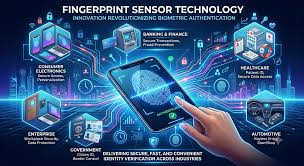
This makes Biometric Security Trends increasingly connected to AI security. A system that previously relied on a recognizable face or voice may need additional evidence to determine whether that signal is authentic.
Voice cloning is an especially important example. A person’s voice can potentially be reproduced using AI-generated audio, meaning voice recognition alone may not always provide sufficient assurance for high-risk actions.
The security industry is therefore exploring combinations of biometric recognition, liveness detection, trusted devices, cryptographic identity, and behavioral signals.
Behavioral Biometrics and Biometric Security Trends
Behavioral biometrics are another emerging area of Biometric Security Trends. Instead of focusing only on physical characteristics, behavioral systems can examine how a person interacts with a device.
Typing rhythm, touchscreen interaction, mouse movement, walking patterns, device handling, and other behavioral characteristics can potentially provide additional authentication signals.
The major difference is that behavioral information can be observed during an interaction rather than captured only at login.
Behavioral Biometrics in Biometric Security Trends
Imagine unlocking a device successfully with your face. Traditional authentication may consider the process finished. A behavioral system could continue evaluating whether the ongoing interaction resembles the normal behavior associated with the authenticated user.
This creates the possibility of continuous or adaptive authentication.
However, behavioral biometrics also have limitations. People’s behavior changes depending on stress, injury, location, device type, accessibility needs, and other circumstances. A reliable system therefore needs to account for natural variation rather than treating every behavioral difference as suspicious.
Heartbeat and Wearable Biometric Security Trends
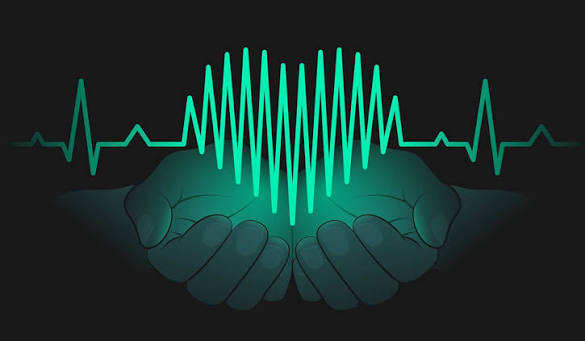
Heartbeat-based authentication is another interesting area within Biometric Security Trends. Wearable devices can measure cardiac activity through sensors, creating signals that may potentially contribute to identity verification.
The concept of a heartbeat signature is attractive because cardiac signals are connected to the individual and can potentially be measured continuously through a wearable device.
However, this technology should be viewed as an emerging research and development area rather than a universal replacement for established authentication systems. Sensor quality, movement, health-related variation, device placement, privacy, and false acceptance or rejection rates all matter.
The broader trend is important: authentication is gradually expanding beyond static characteristics toward dynamic signals that can be observed during real-world interaction.
Privacy Challenges in Biometric Security Trends
Privacy is one of the most important considerations surrounding Biometric Security Trends. Biometric information is highly sensitive because it is connected directly to an individual.
Organizations collecting biometric information need to think carefully about how the data is stored, processed, protected, retained, and deleted. Where possible, systems can use privacy-preserving architectures that minimize unnecessary storage of raw biometric information.
There is also an important difference between authentication and identification. A device that checks whether the person matches an already enrolled identity can involve a different privacy model from a system attempting to identify an unknown person from a large database.
As biometric technologies become more powerful, transparency and responsible data governance become increasingly important.
Biometric Security Trends: Traditional vs Modern Security
| Security Approach | Traditional Approach | Modern Biometric Security Trends |
|---|---|---|
| Face recognition | Basic facial matching | Facial matching plus liveness |
| Fingerprint | Single biometric | Biometric plus device security |
| Voice | Voice recognition | Voice plus additional verification |
| Authentication | Mainly at login | Potentially continuous |
| Signals | One primary signal | Multiple signals |
| AI protection | Limited | AI-aware spoofing defenses |
| Behavioral data | Often ignored | Can support risk assessment |
| Wearables | Mostly separate | Can provide additional signals |
| Privacy | Data storage concerns | Greater focus on protected processing |
| Identity proof | Static matching | Dynamic and multimodal verification |
Graph: Biometric Authentication Layers
The following graph is a conceptual security-layer illustration, not a measured industry statistic. It shows how modern biometric authentication can add multiple layers beyond basic biometric matching.
The concept is straightforward: modern systems can combine several signals rather than relying entirely on one static biometric characteristic.
The Future of Biometric Security Trends
The future of Biometric Security Trends is likely to involve identity systems that continuously evaluate multiple signals rather than performing a single check at the moment of login.
A future smartphone may not simply ask whether your face matches a stored template. It could consider whether a live person is present, whether the device is trusted, whether the interaction appears normal, and whether the requested action requires additional verification.
This approach can be especially valuable for sensitive operations. Opening a phone may require one level of authentication, while changing account recovery information or approving a financial transaction could require a stronger combination of signals.
The broader movement is toward adaptive authentication, where security requirements change according to risk.
Biometric Security Trends and Passwordless Authentication
Passwordless authentication is also closely connected to Biometric Security Trends. Biometrics can provide a convenient way to unlock cryptographic credentials stored on a trusted device.
In this model, the biometric does not necessarily become the secret itself. Instead, it can help unlock a protected credential or authorize a cryptographic operation.
This distinction is important because it can reduce the need to transmit raw biometric information across networks.
Modern authentication standards and platform security systems increasingly emphasize device-bound credentials and phishing-resistant authentication rather than relying exclusively on reusable passwords.
Biometric Security Trends and Continuous Verification
Continuous verification represents another important direction. Instead of assuming that authentication at the beginning of a session remains valid indefinitely, a system can continue evaluating risk during the session.
For example, a user could successfully authenticate and then begin accessing sensitive information. If the device suddenly changes behavior, the system detects an unusual access pattern, or the risk level increases, additional verification could be requested.
This approach does not mean constantly interrupting users. Risk-based systems can potentially operate quietly in the background and request stronger verification only when necessary.
The objective is to make authentication more responsive to changing circumstances.
Challenges Facing Biometric Security Trends
Despite rapid innovation, Biometric Security Trends face several challenges. Accuracy remains important because security systems must balance false acceptance against false rejection. A system that rejects legitimate users too frequently becomes frustrating, while a system that accepts unauthorized users creates security risks.
Privacy is another major concern. The more biometric and behavioral information a system collects, the more responsibility organizations have to protect that information.
Interoperability can also be difficult. Different devices, platforms, sensors, and authentication systems may use different technologies and standards.
Finally, attackers and defenders are constantly adapting to each other’s techniques. A security feature that works effectively against one spoofing method may require improvement when new synthetic-media techniques appear.
Conclusion: The Next Stage of Biometric Security Trends
Biometric Security Trends in 2026 are moving beyond simple fingerprint and facial recognition. Liveness detection, multimodal authentication, behavioral biometrics, wearable signals, adaptive authentication, and stronger device-based credentials are helping redefine how digital identity can be verified.
The biggest shift is from asking “Does this biometric match?” toward asking “Is this a real person using a trusted device under the right circumstances?”
Biometrics can remain an important part of modern authentication, but they are increasingly being combined with other security layers. As AI-generated faces, voices, and synthetic media become more sophisticated, stronger identity verification will depend on multiple independent signals rather than one static characteristic.
The future of authentication is therefore likely to be more dynamic, adaptive, and layered, with security systems continuously evaluating evidence while attempting to minimize unnecessary friction and protect sensitive biometric information.
 administratoir16