
The Longevity Tech Stack is becoming an important part of the modern wellness and health-technology landscape in 2026. Instead of relying only on traditional health checkups, new technologies are helping people understand patterns in sleep, activity, nutrition, glucose, recovery, and other measurable signals. Wearables, continuous glucose monitors, microbiome testing, blood biomarkers, and artificial intelligence are increasingly being combined into personalized health platforms.
The idea behind the Longevity Tech Stack is not simply to predict how long someone will live. Its bigger goal is to help people understand measurable aspects of their health and identify lifestyle patterns that may support healthier aging. As these technologies become more accessible, consumers are moving toward a more data-driven approach to everyday wellness.
Table of Contents
- What Is the Longevity Tech Stack?
- Biological Age Tracking
- AI Health Coaches
- Wearables and Continuous Monitoring
- Multi-Omics and Personalized Health
- Preventive Health and Early Risk Detection
- Longevity Data and Privacy
- Future of the Longevity Tech Stack
- Final Thoughts
What Is the Longevity Tech Stack?
The Longevity Tech Stack refers to the combination of digital tools, health sensors, testing platforms, software, and artificial intelligence used to monitor factors associated with healthy aging. Instead of depending on one device or one medical test, the concept connects multiple sources of information into a broader picture of an individual’s health.
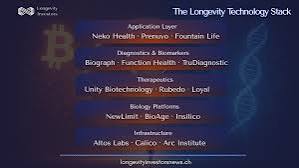
A modern system may combine wearable data with blood testing, sleep information, exercise patterns, nutrition records, glucose measurements, and other biomarkers. AI can then analyze these different signals and present patterns that may be difficult for a person to recognize manually.
However, these technologies should not be confused with a guaranteed method of extending human lifespan. Biological-age estimates and wellness scores are measurements or models, and their accuracy and clinical usefulness can vary depending on the technology and evidence behind it.
Biological Age Tracking in the Longevity Tech Stack
One of the most interesting areas of the Longevity Tech Stack is biological age tracking. Chronological age simply measures the number of years someone has lived, while biological-age technologies attempt to estimate aspects of aging using measurable biological signals.
Some approaches analyze DNA methylation, while others examine blood biomarkers, physical performance, or combinations of different measurements. These systems can produce an estimated biological-age value, but the result should be interpreted carefully because different tests can use different definitions and methods.
The growing interest in biological age shows how consumers are becoming more interested in health measurements beyond traditional numbers such as weight or blood pressure. Instead of asking only how old they are, people increasingly want to understand how their health-related measurements are changing over time.
Why Biological Age Tracking Matters
The real value may come from observing trends rather than focusing on one score. If a person repeats the same validated measurement under appropriate conditions, changes over time may provide more useful information than a single result.
This makes biological-age tracking particularly interesting as part of a broader Longevity Tech Stack, where several types of health information can be considered together.
AI Health Coaches in the Longevity Tech Stack
Artificial intelligence is another major component of the Longevity Tech Stack. AI health platforms can process large amounts of information from wearables, health questionnaires, laboratory results, and lifestyle records.
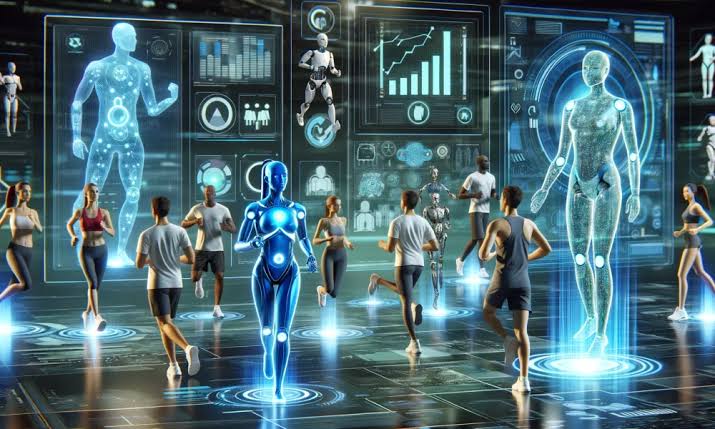
Instead of presenting hundreds of individual measurements, an AI system can organize the information into understandable patterns. For example, a platform might identify a relationship between poor sleep, reduced activity, and changes in daily recovery measurements.
The important distinction is that AI-generated wellness suggestions are not automatically medical advice. A system may identify patterns, but diagnosis and treatment decisions should remain under appropriate professional supervision.
Personalized Recommendations
Personalization is one of the biggest attractions of AI health technology. Two people may have completely different sleep schedules, exercise habits, dietary patterns, and recovery profiles. An AI system can potentially use these differences to provide more individualized recommendations than generic wellness content.
As the technology develops, the Longevity Tech Stack could increasingly function as a personal health-data dashboard rather than simply another fitness application.
Wearables and Continuous Monitoring
Wearable devices have already changed how people track health-related information. Smartwatches and fitness trackers can monitor measurements such as heart rate, activity, sleep, and exercise patterns.
Continuous glucose monitors have also attracted attention outside traditional diabetes management, although their usefulness for healthy people and general wellness remains an evolving area of research. These devices can show how glucose changes in response to meals, activity, stress, and other factors.
The Longevity Tech Stack connects these individual measurements rather than treating each one as an isolated number.
From Occasional Testing to Continuous Data
Traditional health testing often provides a snapshot at a particular moment. Wearables can provide repeated measurements throughout the day, creating a much larger dataset.
This does not necessarily mean that more data automatically produces better health decisions. Data quality, interpretation, context, and privacy all matter. The challenge for longevity technology is turning continuous measurements into information that is actually useful.
Multi-Omics and Personalized Health
Another emerging area of the Longevity Tech Stack is multi-omics. The term generally refers to combining different layers of biological information, such as genomics, transcriptomics, proteomics, metabolomics, or microbiome-related measurements.
The basic idea is that one biological measurement may provide only a limited view. Combining multiple datasets could potentially provide a richer understanding of biological processes.
Microbiome testing is particularly popular in consumer wellness, but consumers should be careful about assuming that a microbiome result can directly predict longevity. Scientific understanding of the gut microbiome is developing rapidly, and the interpretation of individual test results can be complex.
Connecting Different Biological Signals
The future of the Longevity Tech Stack may depend on connecting laboratory data with everyday behavioral data. Blood biomarkers could be considered alongside sleep, exercise, nutrition, and other measurements.
AI may become useful for identifying relationships across these datasets, but strong validation will be necessary before predictions are treated as reliable medical conclusions.
Preventive Health in the Longevity Tech Stack
A major reason people are interested in the Longevity Tech Stack is prevention. Instead of waiting until a health problem becomes obvious, people want to monitor measurable changes earlier.
Digital health technologies can encourage users to pay attention to sleep, physical activity, cardiovascular indicators, nutrition, and other aspects of health. In some situations, abnormal measurements may encourage a person to speak with a healthcare professional.
The goal is not to replace doctors with algorithms. Instead, the technology can potentially help people organize information and have better-informed conversations with healthcare providers.
From Reactive Care to Proactive Monitoring
Healthcare has traditionally focused heavily on diagnosing and treating disease after symptoms or measurable problems appear. Digital monitoring introduces a different model in which people continuously track selected health indicators.
The Longevity Tech Stack fits into this broader shift toward proactive health monitoring. Its long-term usefulness will depend on whether the collected data leads to meaningful improvements in health outcomes rather than simply creating more notifications and scores.
Longevity Data and Privacy
The growth of the Longevity Tech Stack also creates an important privacy challenge. Health platforms may collect highly personal information, including sleep patterns, heart-rate data, laboratory results, genetic information, location-related activity data, and lifestyle records.
Consumers should understand what information a platform collects, how long it stores that information, who can access it, and whether it is shared with third parties. Strong security and transparent data policies are particularly important when multiple health-data sources are connected.
As longevity platforms become more sophisticated, privacy may become just as important as the technology itself.
Longevity Tech Stack Trends to Watch in 2026
| Trend | Main Technology | Potential Use |
|---|---|---|
| Biological Age Tracking | Biomarker analysis | Aging-related monitoring |
| AI Health Coaches | Artificial intelligence | Personalized wellness insights |
| Continuous Monitoring | Wearables and sensors | Daily health tracking |
| Multi-Omics | Biological data analysis | Deeper health research |
| CGM Integration | Glucose sensors | Glucose pattern monitoring |
| Digital Health Platforms | Cloud + AI | Centralized health data |
| Privacy Technology | Encryption and controls | Safer health-data management |
Longevity Tech Stack Growth Concept
The following conceptual graph shows how different parts of the Longevity Tech Stack can connect into one digital health ecosystem:
Wearables ───────┐
                 │
CGM Data ────────┤
                 │
Blood Tests ─────┼──> AI Analysis ──> Personalized Insights
                 │
Sleep Data ──────┤
                 │
Lifestyle Data ──┘
                         │
                         ▼
                Long-Term Health Tracking
This model illustrates the central idea: multiple data sources can be combined to create a more comprehensive health picture. It does not mean that AI can accurately predict an individual’s lifespan or guarantee healthier aging.
The Future of the Longevity Tech Stack
The next stage of the Longevity Tech Stack will likely involve better integration between consumer devices, laboratory testing, health applications, and clinical healthcare. Instead of having separate apps for sleep, exercise, glucose, nutrition, and laboratory results, consumers may increasingly expect these systems to communicate with each other.
AI could help transform large amounts of health data into simpler summaries and identify changes that deserve attention. At the same time, better scientific validation will be necessary to distinguish useful measurements from attractive but weakly supported wellness claims.
Affordability will also influence the future. If advanced testing remains expensive, longevity technology may remain concentrated among wealthier consumers. As sensors and testing become cheaper, some technologies could become more accessible to a wider population.
Final Thoughts
The Longevity Tech Stack represents a broader change in how people think about aging and preventive health. Biological-age measurements, wearables, continuous monitoring, AI systems, and multi-omics research are creating new ways to collect and interpret health information.
But technology alone cannot guarantee a longer life. The most useful approach is to treat these tools as sources of information rather than perfect predictors. As research improves, the Longevity Tech Stack could become an important part of personalized health monitoring while keeping scientific evidence, professional healthcare, and data privacy at the center.
 administratoir16