
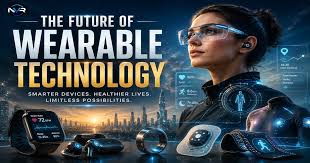
BCI Wearable Trends are becoming an important part of the rapidly developing brain-computer interface industry in 2026. Brain-computer interfaces were once mainly associated with medical research and experimental laboratories, but advances in sensors, signal processing, artificial intelligence, and wearable hardware are creating new consumer applications. Non-invasive devices can capture certain patterns of brain activity and translate them into digital signals that software can analyze.
The growing interest in BCI Wearable Trends reflects a shift from using brain-computer interfaces only for assistive technology toward exploring productivity, gaming, accessibility, communication, and human-computer interaction. However, consumer BCIs remain an emerging technology, and their capabilities are more limited than science-fiction portrayals suggest.
Table of Contents
- What Are BCI Wearables?
- Non-Invasive BCI Wearable Trends
- AI and Brain Signal Processing
- BCI Wearable Trends in Productivity
- Gaming and Mental-Control Interfaces
- Medical and Accessibility Applications
- Privacy and Brain Data
- Future of BCI Wearable Trends
- Final Thoughts
What Are BCI Wearables?
BCI Wearable Trends focus on wearable devices that attempt to detect brain activity and translate specific neural signals into commands or useful information. Unlike invasive BCIs, which require medical procedures to place electrodes or devices inside the body, non-invasive systems generally use sensors positioned on or around the head.
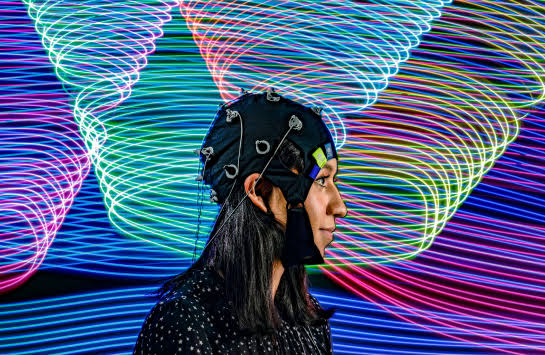
Electroencephalography, commonly known as EEG, is one of the main technologies used in non-invasive BCI research. EEG sensors detect electrical activity associated with brain function, although the signals captured outside the skull can be noisy and difficult to interpret.
Modern software and machine-learning techniques can help identify patterns in these signals. The result can allow a user to interact with a computer through limited forms of mental intent, depending on the device and application.
Non-Invasive BCI Wearable Trends
One of the biggest BCI Wearable Trends in 2026 is the continued development of non-invasive hardware. Headbands, headsets, earbuds, and other wearable concepts are being explored for applications ranging from research to entertainment.
The attraction is easy to understand. A wearable BCI does not require surgery, which makes experimentation much more accessible than an implanted system. At the same time, non-invasive sensors generally face technical limitations involving signal quality, movement artifacts, calibration, and individual differences.
This means consumer BCI devices should not be viewed as direct replacements for sophisticated medical implants. They represent a different category with different capabilities and risks.
Better Sensors in BCI Wearable Trends
Sensor development is central to BCI Wearable Trends because the quality of the collected signal affects everything that happens afterward. More comfortable electrodes, improved signal processing, and better algorithms can make wearable systems easier to use.
Future devices may also combine brain signals with eye movement, facial signals, motion sensors, and other physiological measurements. Combining multiple signals can potentially help software understand user intent more reliably than relying on EEG alone.
AI and Brain Signal Processing
Artificial intelligence is becoming increasingly important to BCI Wearable Trends because brain signals are complex. A wearable device may collect large amounts of raw data, but converting that data into a useful command requires sophisticated processing.
Machine-learning models can be trained to recognize patterns associated with specific tasks. For example, a BCI system might learn which signal patterns correspond to a particular imagined movement or selection command.
The challenge is that brain signals can vary significantly between individuals and even within the same person. A system that works well in one controlled environment may not perform identically during everyday activities.
Personalized BCI Models
Personalization could therefore become a major part of BCI Wearable Trends. Instead of expecting one model to work perfectly for everyone, future systems may adapt to an individual’s neural patterns through calibration and continued learning.
This could make consumer BCIs more practical, although it also creates questions about how much personal brain data needs to be collected to maintain and improve the system.
BCI Wearable Trends in Productivity
The concept of using BCIs for productivity has generated considerable interest. BCI Wearable Trends in this area explore whether brain-sensing devices can provide information about attention, workload, fatigue, or other cognitive states.
For example, a wearable might estimate changes in mental workload and present this information through an application. In theory, software could use such signals to adjust an interface or reduce interruptions.
However, claims that consumer EEG devices can reliably identify a person’s exact “flow state” or automatically understand complex thoughts should be treated cautiously. Brain activity is complicated, and cognitive states cannot always be reduced to one simple signal.
Smarter Digital Interaction
The long-term opportunity is not necessarily reading thoughts. A more realistic direction is creating additional interaction signals between people and computers.
A user could potentially perform a small number of trained commands without touching a keyboard or screen. Combined with conventional controls, this could create hybrid interfaces where brain signals supplement rather than replace existing interaction methods.
Gaming and Mental-Control Interfaces
Gaming is another area receiving attention in BCI Wearable Trends. Video games already use controllers, keyboards, cameras, microphones, and motion sensors to understand player actions. BCIs could introduce another layer by detecting limited neural patterns associated with trained commands.
In controlled situations, a player might use a BCI to trigger a predefined action or interact with a game mechanic. This does not mean that players can freely control every aspect of a game simply by thinking about it.
The most practical consumer applications are likely to involve simple, clearly defined commands rather than unrestricted mind control.
The Gaming Experience
BCI technology could nevertheless create new forms of interaction. Imagine a game that combines traditional controls with a neural signal to activate a special ability or change the game environment.
This type of experience could make BCI Wearable Trends particularly interesting for experimental gaming, accessibility, and immersive entertainment.
Medical and Accessibility Applications
The medical field remains one of the most important areas for brain-computer interfaces. BCI Wearable Trends can support research into communication and assistive technologies for people with neurological disabilities.
Invasive BCIs have demonstrated important potential in clinical research, particularly for people who have lost the ability to communicate or control parts of their body. Non-invasive systems are also being investigated because they can offer a different balance between accessibility and technical performance.
The distinction between medical and consumer BCIs is important. Medical devices typically undergo specific testing, regulatory processes, and clinical evaluation, while consumer wellness or entertainment products may have different standards and intended uses.
Accessibility Through BCI Wearable Trends
For some users, hands-free computer interaction could offer meaningful accessibility benefits. A wearable BCI might eventually allow limited commands to be performed without traditional physical controls.
The technology still needs substantial development before broad everyday use becomes practical, but accessibility remains one of the strongest reasons for continued BCI research.
Privacy and Brain Data
Privacy is becoming one of the most important issues surrounding BCI Wearable Trends. Brain-related data can be significantly more sensitive than ordinary fitness information because it may contain signals associated with neurological activity.
Consumers should pay close attention to how BCI companies collect, store, process, and share neural data. The possibility of combining brain signals with AI also raises questions about consent, ownership, security, and acceptable commercial use.
The future of consumer BCIs will therefore depend not only on better sensors but also on responsible data governance.
Protecting Neural Information
Strong security practices could become essential as BCI devices become more connected. Users may expect transparent explanations about what data is collected and whether raw neural signals leave the device.
Privacy-by-design approaches could help reduce unnecessary collection while giving users greater control over their information.
BCI Wearable Trends in 2026
| BCI Area | Main Technology | Potential Application |
|---|---|---|
| Non-Invasive EEG | External brain sensors | Neural interaction |
| AI Signal Processing | Machine learning | Pattern recognition |
| Productivity | Cognitive-state estimation | Focus and workload research |
| Gaming | Neural command detection | Experimental game control |
| Accessibility | Assistive interfaces | Hands-free interaction |
| Research | Brain-data analysis | Neuroscience studies |
| Privacy | Data security | Neural-data protection |
BCI Wearable Trends Growth Concept
The following conceptual graph shows how different technologies can connect within the emerging BCI ecosystem:
        EEG Sensors
             │
             ▼
      Brain Signal Data
             │
             ▼
      Signal Processing
             │
             ▼
          AI Model
        ┌────┼────┐
        │    │    │
        ▼    ▼    ▼
   Gaming  Work  Accessibility
        │    │    │
        └────┼────┘
             ▼
      Human-Computer Interaction
This graph represents a conceptual technology pathway rather than a prediction of market growth or device performance.
The Future of BCI Wearable Trends
The future of BCI Wearable Trends will likely depend on making devices more comfortable, reliable, affordable, and useful. Hardware improvements alone may not be enough. Software will need to translate noisy neural signals into commands that work consistently in real-world environments.
Hybrid systems may become particularly important. Instead of replacing keyboards, touchscreens, voice commands, or controllers, BCIs could provide an additional input channel. This approach may be more practical because users would not have to depend entirely on brain signals.
As research progresses, the boundary between wearable computing and neural interfaces could become less distinct. Headphones, glasses, watches, and other smart devices may increasingly combine multiple sensors to understand both physical and neural signals.
Final Thoughts
BCI Wearable Trends show how brain-computer interfaces are gradually moving beyond specialized laboratories into broader discussions about consumer technology. Non-invasive EEG, AI-powered signal processing, gaming interfaces, productivity research, and accessibility are all contributing to this development.
The technology is promising, but it is still important to separate genuine capabilities from exaggerated claims. Today’s consumer BCIs generally work with limited, trained signals rather than unrestricted thought reading. As sensors and AI improve, however, even small neural commands could become a useful addition to the way humans interact with digital devices.
 administratoir16