

Direct Air Capture is becoming one of the most closely watched carbon-removal technologies in 2026. Instead of preventing new carbon dioxide emissions, Direct Air Capture systems remove CO₂ that is already present in the atmosphere. Large machines move huge quantities of air through specialized materials that selectively capture carbon dioxide before the remaining air is released back into the environment.
The idea sounds simple, but the engineering challenge is enormous. Atmospheric CO₂ exists at a relatively low concentration of around 420–430 parts per million, meaning DAC systems must process very large volumes of air to capture meaningful quantities of carbon. The International Energy Agency notes that this low concentration is one of the main reasons DAC remains energy-intensive and expensive.
In 2026, however, Direct Air Capture is moving beyond small laboratory experiments. Commercial facilities are operating, new projects are being developed, and companies are investing heavily in better sorbent materials, lower-energy processes, larger collectors, and permanent underground storage. Climeworks, for example, reported in September 2026 that upgrades at its Mammoth facility in Iceland had more than doubled capture performance in upgraded collector containers while cutting operating costs by more than 50%.
Table of Contents
- What Is Direct Air Capture?
- Why Direct Air Capture Matters in 2026
- How Direct Air Capture Technology Works
- New Sorbent Materials and Direct Air Capture
- Direct Air Capture Costs in 2026
- Direct Air Capture and Permanent Carbon Storage
- Corporate Investment in Direct Air Capture
- Direct Air Capture Challenges
- Direct Air Capture Comparison Table
- Direct Air Capture Trend Graph
- The Future of Direct Air Capture
- Final Thoughts
What Is Direct Air Capture?
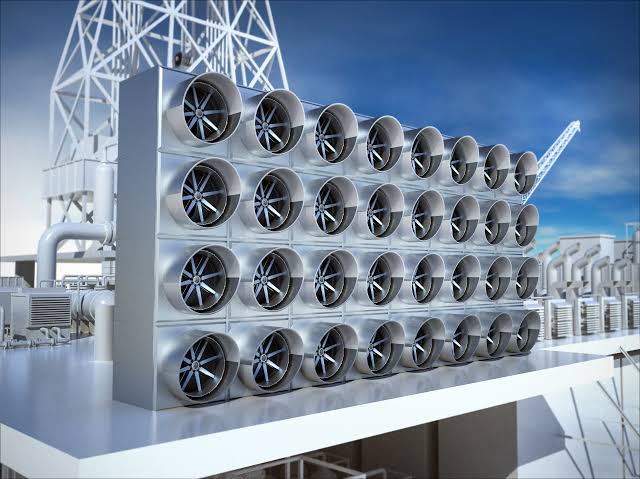
Direct Air Capture is a carbon-removal process that captures carbon dioxide directly from ambient air. Unlike traditional carbon capture systems attached to factories or power plants, DAC does not need to be installed at the original source of the emissions.
A typical DAC system uses fans to move air through a capture material. Depending on the technology, this material may chemically bind with CO₂. Once the material becomes saturated, heat, pressure changes, moisture, or another process can release concentrated CO₂ so the capture material can be reused.
The resulting CO₂ can then be transported for permanent storage or used in certain industrial applications. For genuine carbon removal, however, the storage pathway is critical because captured carbon that is later released back into the atmosphere does not provide the same long-term removal benefit.
This makes Direct Air Capture different from ordinary emissions reduction. Solar panels, electric vehicles, and energy efficiency can reduce future emissions, while DAC is designed to remove carbon already in the atmosphere.
Why Direct Air Capture Matters in 2026
Interest in Direct Air Capture is increasing because some sectors are extremely difficult to decarbonize completely. Aviation, heavy industry, shipping, and certain industrial processes may continue producing residual emissions even as cleaner technologies become widespread.
Carbon removal can potentially address part of those residual emissions. The IEA describes DAC as a potential carbon-removal solution within net-zero pathways, while also emphasizing that its costs remain high and uncertain.
This distinction is important. Direct Air Capture should not be viewed as a replacement for cutting emissions. Removing CO₂ from the atmosphere is generally more energy-intensive than avoiding the same emissions in the first place. The strongest climate strategies therefore focus first on reducing emissions while using carbon removal for difficult-to-eliminate emissions and, potentially, historical atmospheric CO₂.
In 2026, the technology is becoming more visible because real-world facilities are providing operating data that researchers and companies can use to improve future designs.
How Direct Air Capture Technology Works
Modern Direct Air Capture systems generally follow a cycle. Fans move ambient air through a collector containing a chemical sorbent or another capture material. The material selectively interacts with carbon dioxide while allowing most other components of the air to pass through.
Once enough CO₂ has accumulated, the system regenerates the sorbent. This releases a concentrated stream of carbon dioxide while allowing the capture material to be reused.
The captured gas can then be compressed and transported to a storage location. In Iceland, Climeworks’ Mammoth facility is connected with permanent geological storage infrastructure, where captured CO₂ can be mineralized underground. Mammoth has a designed annual capture capacity of up to 36,000 tonnes, although actual net removal depends on plant performance and the complete removal process.
This illustrates an important feature of Direct Air Capture: the machine itself is only one part of the system. Energy supply, CO₂ transportation, storage, monitoring, and verification are all important to the final climate benefit.
New Sorbent Materials and Direct Air Capture
One of the most important areas of innovation in Direct Air Capture is the development of improved sorbent materials. A DAC plant becomes more attractive when its capture material can absorb more CO₂, operate with less energy, last longer, and regenerate efficiently.
Climeworks reported that its Generation 3 technology uses structured sorbent materials designed to increase contact with CO₂. According to the company, the technology can more than double capture capacity per module, reduce energy consumption by about half, and extend material lifetime.
These improvements matter because the economics of Direct Air Capture depend heavily on energy use and material performance. If a sorbent requires less energy to regenerate and lasts longer before replacement, the cost of each captured tonne can potentially fall.
Researchers and companies are therefore exploring new solid sorbents, liquid systems, improved contactors, electrochemical approaches, and other capture methods. The winning technology has not yet been determined, and different approaches may work better in different locations.
Direct Air Capture Costs in 2026
Cost remains one of the biggest challenges for Direct Air Capture. It is important not to treat a single cost estimate as the universal price of DAC because costs vary according to technology, energy prices, financing, plant design, scale, and whether the figure represents capture cost or complete net-removal cost.

The IEA’s 2025 analysis estimated current DAC projects at approximately $500–$1,900 per tonne of CO₂, while technological progress could bring costs significantly lower over time.
At the same time, companies are reporting substantial operational improvements. In September 2026, Climeworks said that upgrades at Mammoth had reduced operating costs by more than 50% and improved capture performance by more than two times in upgraded collector containers.
Climeworks’ next-generation technology strategy targets capture costs of roughly $250–$350 per tonne and total net-removal costs of around $400–$600 per tonne by 2030. These are company targets, not an established industry-wide 2026 price.
The difference between these figures shows why Direct Air Capture should be discussed as a rapidly developing technology rather than a mature low-cost industry.
Direct Air Capture and Permanent Carbon Storage
Capturing carbon is only half of the carbon-removal process. Direct Air Capture becomes genuine durable carbon removal when the captured CO₂ is stored in a way that prevents it from returning to the atmosphere for a very long period.
Geological storage is one approach. Concentrated CO₂ can be injected into suitable underground formations where geological processes can eventually lock it away. In Iceland, Climeworks works with Carbfix, which uses mineralization to turn CO₂ into stable carbonate minerals underground.
Storage infrastructure therefore needs to grow alongside DAC capacity. A large capture facility without a reliable and permanent storage pathway cannot deliver the same climate value as a complete capture-and-storage system.
Monitoring and verification are also essential. Buyers and regulators need evidence that the claimed amount of carbon was actually removed and permanently stored.
Corporate Investment in Direct Air Capture
Technology companies and other large corporations have become important buyers and investors in carbon removal. Direct Air Capture can appeal to companies that have reduced their operational emissions but still need strategies for residual emissions or want to purchase durable carbon-removal credits.
Corporate demand can provide early revenue for an industry that is still developing. Climeworks has reported strong corporate interest in carbon removal and has raised substantial private capital to expand its technology. In 2025, the company announced a $162 million equity financing round, taking total funding since its founding to more than $1 billion.
However, corporate purchases alone are unlikely to create a global-scale DAC industry. Government policy, infrastructure investment, research funding, long-term contracts, and carbon-removal standards can all influence how quickly the sector develops.
Direct Air Capture Challenges
Despite rapid progress, Direct Air Capture still faces major challenges. The first is energy consumption. Because atmospheric CO₂ is highly diluted, DAC machines must process large quantities of air.
The second challenge is cost. Even with recent improvements, DAC generally remains much more expensive than many conventional emissions-reduction options.
The third challenge is scale. A facility capturing tens of thousands of tonnes per year is significant for engineering development, but global climate goals require vastly larger quantities of carbon removal.
The fourth challenge is infrastructure. Captured CO₂ needs transportation and permanent storage, which means DAC projects may need pipelines, storage sites, monitoring systems, electricity, heat, and other supporting infrastructure.
Finally, the climate benefit depends on the energy source. If a DAC plant uses high-carbon electricity or heat, part of the captured carbon can be offset by emissions from operating the facility. The IEA has therefore emphasized the importance of energy availability and low-carbon energy when evaluating DAC systems.
Direct Air Capture Comparison Table
| Direct Air Capture Factor | Current Situation | Future Opportunity |
|---|---|---|
| Capture cost | Still relatively high | Lower costs through scale and innovation |
| Sorbent technology | Rapidly improving | Longer-lasting, lower-energy materials |
| Plant scale | Commercial plants exist | Megaton-scale projects under development |
| Energy demand | Major challenge | More efficient heat and electricity systems |
| CO₂ storage | Available in selected regions | Larger global storage networks |
| Corporate demand | Growing | Potential long-term carbon-removal market |
| Climate role | Complement to emissions cuts | Potential major carbon-removal pathway |
Direct Air Capture Trend Graph
The following graph is a conceptual trend illustration, not measured industry data. It shows the expected direction of technological development as DAC companies improve efficiency, materials, scale, and operating performance.
The trend should not be interpreted as an official forecast. It represents the general technology-development direction discussed by companies and energy analysts. For example, Climeworks has reported substantial performance improvements at Mammoth during 2026 and is continuing to develop next-generation DAC technology.
The Future of Direct Air Capture
The future of Direct Air Capture will depend on whether the industry can turn impressive engineering demonstrations into affordable, repeatable, large-scale facilities.
One promising direction is modular construction. Instead of building every DAC facility as a unique megaproject, standardized collector units could be manufactured repeatedly and deployed at suitable locations. This could help companies learn from each generation and reduce construction time.
Another important direction is better integration with clean energy. DAC facilities can potentially be located near abundant low-carbon electricity, geothermal resources, waste heat, or other suitable energy sources. Choosing the right location could significantly influence operating costs and lifecycle emissions.
Materials science will remain equally important. A sorbent that captures more CO₂ while requiring less energy and lasting longer could dramatically improve economics.
Storage will also need to scale. More DAC plants require more verified permanent storage capacity, transportation networks, monitoring systems, and regulatory frameworks.
Final Thoughts on Direct Air Capture
Direct Air Capture has moved from an experimental climate concept toward a real industrial technology, but it is still far from being a cheap or universally scalable solution. Commercial plants such as Mammoth are generating valuable real-world operating experience, while new sorbent materials and engineering improvements are targeting lower energy use and lower costs.
The most important development in 2026 may not be a single breakthrough price. Instead, it is the combination of better materials, larger facilities, improved operating performance, corporate demand, government support, and permanent storage infrastructure.
If these elements continue improving together, Direct Air Capture could become an important tool for removing difficult-to-eliminate and historical carbon dioxide from the atmosphere. But its role should complement—not replace—rapid reductions in greenhouse-gas emissions.
 administratoir16