
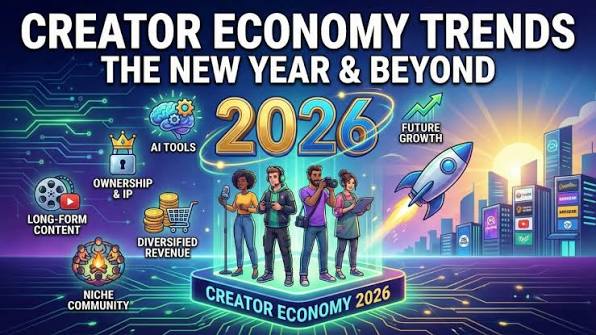
Digital Sovereignty is becoming an important idea in the creator economy of 2026. For years, writers, artists, filmmakers, and online creators have depended heavily on large social media platforms to reach their audiences. These platforms control algorithms, visibility, monetization systems, and sometimes even access to followers. Digital Sovereignty is changing this model by giving creators more control over their content, communities, and online income.
The rise of decentralized technology, blockchain-based payments, independent communities, and creator-owned platforms is creating new possibilities. Instead of depending completely on one social network, creators can build direct relationships with their audiences. This shift is often described through ideas such as the Sovereign Creator and decentralized community infrastructure
The Rise of the Sovereign Creator
The Sovereign Creator is one of the most interesting ideas connected with Digital Sovereignty in 2026. Instead of building an entire career around one social media account, creators can develop multiple channels that they control.
A writer, for example, might publish articles on a personal website, communicate with readers through an independent community, and accept payments through digital payment systems. An artist could similarly distribute artwork through a creator-owned platform while maintaining direct communication with fans.
This model does not mean traditional social platforms disappear. Instead, social networks can become discovery channels while the creator’s main audience relationship exists elsewhere.
Digital Sovereignty Gives Creators More Control
One major attraction of Digital Sovereignty is control. Creators can decide how their content is distributed, how their communities are organized, and which payment methods they accept.
This can also reduce the risk associated with depending entirely on a single platform. If an algorithm changes or a platform modifies its monetization rules, a creator with an independent audience may have more alternatives.
Creator-Owned Communities
Creator-owned communities are another major part of the Digital Sovereignty movement. Instead of relying only on public social media feeds, creators can establish private or decentralized spaces where audiences interact directly with them.
These communities can include premium articles, exclusive videos, digital artwork, live events, discussion groups, and other forms of content. Members may pay directly for access instead of generating revenue primarily through advertising.
The important difference is ownership of the relationship. Rather than treating followers as an audience that belongs to a platform, creators can build systems where the community has a more direct connection with the creator.
Blockchain and Digital Sovereignty
Blockchain technology is frequently discussed in connection with Digital Sovereignty because it can support decentralized ownership and payment systems. Blockchain networks can record transactions without requiring every transaction to be processed through a traditional centralized platform.
This distinction is important because many so-called decentralized projects still depend on centralized companies somewhere in their technology stack.
Digital Sovereignty and Digital Ownership
Digital ownership is another area where blockchain can play a role. Creators can use blockchain-based systems to establish records associated with digital assets or transactions.
However, ownership should not be confused with copyright. Owning a blockchain token does not automatically mean owning the copyright to an image, video, article, or other creative work. Creators still need appropriate legal agreements and copyright protection.
Stablecoins for Creator Payments
Stablecoins are also becoming part of discussions around Digital Sovereignty and online payments. Stablecoins such as USDT are designed to maintain a value linked to a reference currency, commonly the U.S. dollar.
Some creator communities may use stablecoins for international payments because digital transactions can operate across borders without using the same traditional payment infrastructure required by banks or payment processors.
For example, a creator community could potentially use stablecoin payments for memberships or digital services. However, transaction fees, network selection, regulatory requirements, wallet security, and local laws all need to be considered.
The claim that creators automatically keep 99% of revenue should therefore be treated as an example rather than a universal fact. Actual creator earnings depend on blockchain fees, payment services, taxes, infrastructure costs, conversion fees, and other expenses.
Reducing Platform Dependence
One of the strongest arguments for Digital Sovereignty is reducing platform dependence. A creator who receives most of their traffic from one social network can face significant uncertainty if that platform changes its algorithm.
An independent website, mailing list, community, and direct-payment system can provide additional channels. This creates a more diversified creator business rather than putting everything into one platform.
The goal is not necessarily to abandon social media. Instead, creators can use social platforms for discovery while directing loyal audiences toward channels they have greater control over.
Community Clouds and Independent Infrastructure
The idea of Community Clouds represents another possible direction for Digital Sovereignty. Instead of depending entirely on large centralized platforms, communities can experiment with independently operated or decentralized infrastructure.
A community cloud could host creator content, discussion spaces, membership services, or other digital resources. Fans and creators could participate in an ecosystem designed around the needs of that particular community.
This model is still developing, and practical implementation varies widely. Hosting costs, technical expertise, moderation, security, scalability, and user experience remain important challenges.
Digital Sovereignty Needs Reliable Infrastructure
Technology alone cannot create a successful creator economy. A decentralized community still needs reliable servers, security systems, payment infrastructure, moderation policies, and easy-to-use interfaces.
If these elements are missing, users may return to centralized platforms simply because they are easier to use.
Challenges of Digital Sovereignty
Despite its potential, Digital Sovereignty comes with challenges. Decentralized systems can be more complicated for ordinary users, particularly when wallets, blockchain transactions, private keys, and unfamiliar payment systems are involved.
Security is another concern. Losing access to a wallet or private key can create serious problems. Creators also need to understand taxation, financial regulations, copyright law, consumer protection, and platform compliance.
There is also the question of audience discovery. Large social networks provide enormous built-in audiences. An independent creator community may offer more control but require significantly more effort to attract and retain members.
The Future of the Creator Economy
Digital Sovereignty could gradually change how creators think about online careers. Instead of depending entirely on advertising and algorithmic distribution, creators can develop multiple income sources and direct relationships with their audiences.
The future creator economy may combine traditional social media with personal websites, memberships, newsletters, independent communities, digital payments, and decentralized technologies.
Rather than completely replacing major platforms, Digital Sovereignty may encourage creators to build a stronger layer of ownership outside them. This could make creator businesses more diversified and less dependent on a single company’s algorithm or monetization rules.
Conclusion
Digital Sovereignty is becoming a significant concept in the evolving creator economy of 2026. The Sovereign Creator model focuses on giving writers, artists, filmmakers, and other digital professionals greater control over their audiences, content, payments, and online communities.
Blockchain, stablecoins, creator-owned communities, and independent infrastructure may provide new tools for achieving that goal. At the same time, these technologies bring practical challenges involving security, regulation, costs, usability, and audience growth.
The biggest change may not be the disappearance of social media. Instead, it could be the gradual shift from platform-dependent creators to creators who own more of their digital business.
 administratoir16