
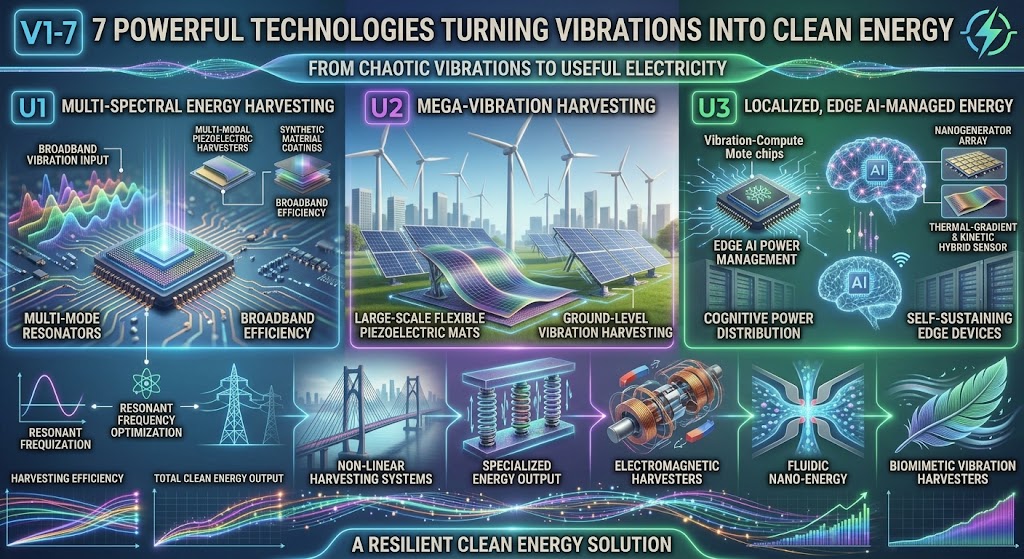
Vibration Energy is an emerging technology concept that can convert small mechanical movements and vibrations into usable electrical power. Every day, vibrations are created by footsteps, vehicles, machinery, bridges, trains, industrial equipment, and even everyday movement. Much of this mechanical energy normally disappears into the surrounding environment as heat and sound 7 Powerful Technologies Turning Vibrations Into Clean Energy.
Researchers are exploring ways to capture some of this wasted movement and convert it into electricity. Vibration Energy could become particularly useful for small sensors, wearable devices, industrial monitoring systems, and connected infrastructure where replacing batteries can be difficult or expensive. While these technologies are still developing, they offer an interesting approach to generating small amounts of electricity from movement that already exists.
Table of Contents
- What Is Vibration Energy?
- Piezoelectric Energy Harvesting
- Triboelectric Nanogenerators
- Electromagnetic Vibration Harvesters
- Resonant Energy Harvesters
- Vibration Energy From Roads and Bridges
- Wearable Vibration Energy Technologies
- The Future of Vibration Energy
What Is Vibration Energy?

Vibration Energy refers to the process of capturing mechanical vibrations and converting them into electrical energy. The concept is part of a broader field known as energy harvesting, where small amounts of energy are collected from the surrounding environment 7 Powerful Technologies Turning Vibrations Into Clean Energy.
Unlike conventional power generation, vibration-based systems do not necessarily require fuel or large external power sources. Instead, they attempt to make use of mechanical movement that is already occurring.
For example, a machine in a factory constantly produces vibrations while operating. A small energy-harvesting device attached to that machine could potentially capture some of those vibrations and convert them into electricity for a low-power sensor 7 Powerful Technologies Turning Vibrations Into Clean Energy.
1. Piezoelectric Energy Harvesting
Piezoelectric materials are one of the most established technologies for Vibration Energy harvesting. These materials can generate an electrical charge when they are mechanically deformed or placed under pressure.
When a piezoelectric material vibrates, bends, or experiences repeated mechanical stress, it can produce a small electrical output. The amount of energy depends on factors such as vibration frequency, material properties, and mechanical design.
How Vibration Energy Works With Piezoelectric Materials
Imagine a small sensor attached to industrial machinery. Every time the machine vibrates, the piezoelectric component experiences mechanical movement. That movement can produce electrical energy that may help power the sensor or extend its battery life.
This approach is especially interesting for low-power electronics that do not require large amounts of electricity 7 Powerful Technologies Turning Vibrations Into Clean Energy.
2. Triboelectric Nanogenerators
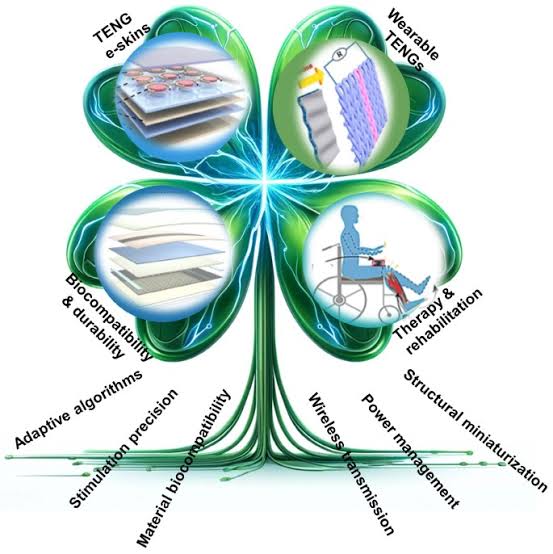
Triboelectric nanogenerators, often called TENGs, use interactions between different materials to generate electrical charges when they come into contact, separate, slide, or move against each other.
This technology can potentially capture very small movements that conventional energy-harvesting systems may not use efficiently.
Small Movements as Vibration Energy
Human movement, fabric motion, mechanical vibrations, and repeated contact can all create opportunities for triboelectric energy harvesting 7 Powerful Technologies Turning Vibrations Into Clean Energy.
Researchers are investigating TENG technology for wearable electronics, environmental sensors, smart surfaces, and other low-power applications.
Because these systems can respond to small mechanical movements, they represent an interesting direction for future Vibration Energy applications.
3. Electromagnetic Vibration Harvesters
Electromagnetic energy harvesters generate electricity through the relative movement between magnets and coils. When vibrations cause one component to move relative to another, an electrical current can be produced 7 Powerful Technologies Turning Vibrations Into Clean Energy.
This principle is related to the same basic electromagnetic concepts used in many conventional generators, but vibration harvesters are generally designed for smaller-scale applications.
Capturing Mechanical Movement
Industrial equipment, vehicles, engines, and other machines can produce continuous vibrations. An electromagnetic harvesting device can potentially use some of that movement to generate electricity for nearby electronics.
This makes the technology particularly relevant to industrial monitoring and sensor networks v.
4. Resonant Energy Harvesters
Resonance occurs when a system vibrates strongly at a particular frequency. Engineers can design energy harvesters to respond efficiently to specific vibration frequencies.
A resonant system can amplify the movement experienced by the energy-harvesting component, potentially increasing the amount of electricity produced 7 Powerful Technologies Turning Vibrations Into Clean Energy.
Matching Vibrations With Vibration Energy Systems
The challenge is that real-world vibrations are not always constant. A machine may operate at different speeds, causing its vibration frequency to change.
Researchers are therefore exploring adaptive and tunable systems that can respond to changing vibration conditions. This could make vibration harvesting more practical in environments where movement is unpredictable 7 Powerful Technologies Turning Vibrations Into Clean Energy.
5. Vibration Energy From Roads and Bridges
Roads, bridges, railways, and other infrastructure experience constant mechanical movement. Vehicles passing over roads create vibrations, while bridges can experience movement from traffic and environmental conditions.
Researchers are exploring whether some of this mechanical activity can be captured and converted into electricity 7 Powerful Technologies Turning Vibrations Into Clean Energy.
Smart Infrastructure and Vibration Energy
One potential application is powering small monitoring sensors. Instead of depending entirely on batteries or external wiring, sensors embedded in infrastructure could potentially harvest small amounts of energy from vibrations around them.
These sensors could monitor factors such as structural movement, temperature, or other environmental conditions.
However, practical energy output, durability, installation costs, and maintenance remain important considerations 7 Powerful Technologies Turning Vibrations Into Clean Energy.
6. Wearable Vibration Energy Technologies
The human body constantly produces movement. Walking, running, bending, and other activities create mechanical motion that could potentially be used for energy harvesting.
Wearable Vibration Energy technologies attempt to capture some of this movement and convert it into electricity.
Turning Movement Into Useful Power
Wearable energy harvesters could potentially support low-power sensors, fitness devices, medical monitoring systems, and other electronics 7 Powerful Technologies Turning Vibrations Into Clean Energy.
For example, a wearable device could harvest energy from repeated movement while a person walks. The generated power may not be enough to operate every type of electronic device, but it could potentially supplement a battery or support extremely low-power components.
7. Industrial Vibration Harvesting
Factories contain many machines that continuously generate mechanical vibrations. Pumps, motors, compressors, fans, and industrial equipment can all produce movement that might be harvested.
This makes industrial environments one of the most practical areas for Vibration Energy research.
Powering Industrial Sensors
Modern factories increasingly use sensors to monitor equipment conditions. These sensors can measure vibration, temperature, pressure, and other factors to help detect equipment problems.
If an energy harvester can generate enough electricity from the machine’s own vibration, it could potentially help power the monitoring sensor attached to that machine.
This creates an interesting cycle where a machine’s movement helps provide energy for the technology monitoring that machine.
The Future of Vibration Energy
The future of Vibration Energy will likely focus on improving efficiency, reducing device size, and making harvesting systems capable of working with irregular movements.
One important area of research is combining different energy sources. A single device could potentially collect energy from vibrations, sunlight, temperature differences, or human movement depending on its environment.
Another important development is ultra-low-power electronics. As sensors and communication systems become more energy efficient, even tiny amounts of harvested electricity could become more useful.
Where Vibration Energy Could Make the Biggest Difference
The technology could be especially valuable in locations where changing batteries is inconvenient. Remote industrial equipment, bridges, pipelines, transportation systems, wearable sensors, and smart infrastructure are all potential applications.
Instead of creating large amounts of electricity, the main purpose of vibration harvesting is often to provide small amounts of power exactly where they are needed.
Challenges of Vibration Energy
Despite its potential, Vibration Energy has several limitations. The amount of available energy can be very small, and vibrations are often inconsistent.
Energy-harvesting devices also need to operate reliably for long periods while surviving mechanical stress and changing environmental conditions.
Another challenge is efficiency. Not every vibration can be converted into useful electricity effectively. Engineers must carefully match the harvesting technology to the frequency, strength, and characteristics of the available movement.
These limitations mean vibration harvesting is unlikely to replace large-scale electricity generation. Instead, its greatest value may come from powering small, distributed electronic systems.
Conclusion
Vibration Energy offers a fascinating way to turn everyday mechanical movement into useful electrical power. Piezoelectric materials, triboelectric generators, electromagnetic systems, resonant harvesters, infrastructure-based systems, wearable devices, and industrial applications are all exploring different ways to capture vibrations.
The technology is especially promising for low-power sensors and connected devices operating in places where batteries are difficult to replace. Although challenges such as low energy output, variable vibrations, durability, and efficiency remain, continued research could make vibration harvesting an increasingly useful part of future energy systems.
Rather than allowing every vibration to disappear as wasted mechanical energy, future technologies may capture small portions of that movement and use it to keep the next generation of sensors and devices running.