
Soft Robot Technologies are changing the way machines interact with people, objects, and their surroundings. Unlike traditional robots that mainly depend on rigid metal joints and hard mechanical structures, soft robots can use flexible materials, elastic components, and advanced sensors to move in more adaptable ways. This makes them especially interesting for situations where robots need to work close to humans.
In 2026, Soft Robot Technologies are becoming an important part of robotics research and development. Their flexible structures can help robots handle delicate objects, move through challenging spaces, and reduce some risks associated with rigid robotic systems. From healthcare and manufacturing to agriculture and exploration, soft robotics is opening new possibilities for safer and more adaptable machines.
Table of Contents
- What Are Soft Robot Technologies?
- Flexible Robots for Safer Human Interaction
- Soft Robot Technologies in Healthcare
- Smarter Robotic Grippers
- Soft Robots in Manufacturing
- Soft Robots for Agriculture
- Wearable Soft Robotics
- Soft Robots for Dangerous Environments
- The Future of Soft Robot Technologies
What Are Soft Robot Technologies?
Soft Robot Technologies focus on robots that use flexible or deformable materials instead of relying entirely on rigid mechanical structures. These materials can include silicone-based components, flexible polymers, artificial muscles, inflatable structures, and other advanced materials designed to bend or change shape.
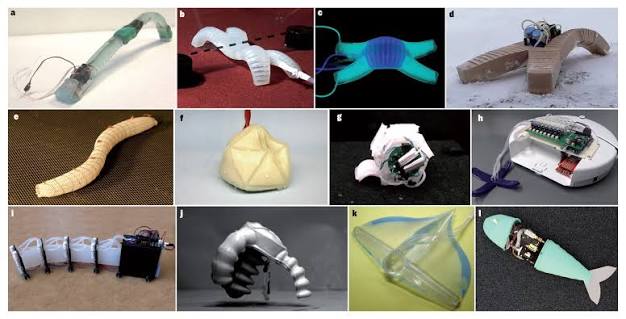
Traditional robots are often designed around precise mechanical movements. Soft robots take a different approach by allowing parts of the machine to deform naturally during movement. This flexibility can help robots interact with irregular objects and environments that would be difficult for conventional machines.
Why Flexible Robotics Matters
The main advantage of Soft Robot Technologies is adaptability. A rigid robotic arm may require carefully programmed movements to handle a particular object, while a flexible robotic system can sometimes conform naturally around an object.
This characteristic is particularly useful when robots need to interact with fragile products, biological materials, or humans. Instead of applying force through rigid mechanical structures, soft systems can distribute pressure more naturally.
Soft Robot Technologies Can Improve Human-Robot Interaction
As robots become more common in workplaces and public environments, safe interaction with humans is becoming increasingly important. Soft Robot Technologies can contribute to this goal by replacing or complementing rigid components with structures capable of controlled deformation.
A flexible robotic arm, for example, may be able to absorb some physical contact instead of transferring the entire force directly to a person or object. Combined with sensors and intelligent control systems, this can create robots that respond more appropriately when unexpected contact occurs.
Safer Collaborative Robots
Collaborative robots, often called cobots, are designed to operate near human workers. Soft robotic components can potentially make these systems more adaptable when handling tasks that require close human interaction.
Safety does not come from soft materials alone. Sensors, software, mechanical limits, emergency systems, and proper industrial design remain essential. However, flexible components can provide another layer of physical adaptability.
Soft Robot Technologies in Healthcare
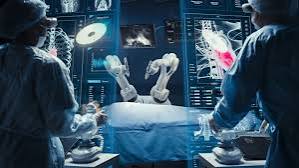
Healthcare is one of the most promising areas for Soft Robot Technologies because medical environments often require gentle and precise interaction with the human body. Rigid machines can perform highly controlled movements, but flexible robotic systems can be designed to conform more naturally to body shapes.
Soft robotic devices are being explored for rehabilitation, assistive technologies, surgical applications, and wearable systems. Their ability to bend and deform can make them more comfortable for certain applications.
Soft Robotic Assistance
Wearable soft robotic systems can potentially assist human movement without surrounding the body with heavy rigid machinery. Flexible actuators can provide controlled assistance to specific movements while allowing users to maintain a degree of natural motion.
This approach could become particularly useful in rehabilitation and mobility assistance, although real-world medical applications require extensive testing for safety and effectiveness.
Smarter Robotic Grippers
One of the most practical applications of Soft Robot Technologies is robotic gripping. Traditional robotic hands can struggle with objects that have unusual shapes, delicate surfaces, or unpredictable textures.
Soft grippers can deform around objects rather than depending entirely on rigid fingers. This makes them useful for handling items such as fruits, vegetables, food products, laboratory materials, and fragile consumer goods.
Flexible Grippers and Delicate Objects
A soft gripper can potentially distribute pressure over a larger area. Instead of gripping an object at a few rigid contact points, the flexible material can conform around its surface.
This could reduce damage when robots handle delicate products. Sensors can also help robotic systems detect pressure and adjust their grip according to the object they are holding.
Soft Robot Technologies in Manufacturing
Manufacturing has traditionally depended heavily on rigid robotic arms because they provide speed, precision, and repeatability. Soft Robot Technologies can complement these systems in tasks where flexibility and gentle handling are more important.
Factories could use flexible robotic systems to manipulate irregular products, assist workers, or perform tasks that require contact with objects of different shapes.
The combination of conventional industrial robots with soft robotic components could create hybrid systems that provide both precision and adaptability.
Soft Robots in Agriculture
Agriculture presents unique challenges for robotics because plants, fruits, soil, and outdoor environments are highly variable. Soft Robot Technologies could help agricultural robots interact with plants without applying excessive force.
A harvesting robot, for example, needs to identify and collect produce without damaging it. Flexible robotic grippers could make this process more suitable for delicate crops.
Gentle Automation for Crops
Soft robotics could also support tasks such as plant handling, harvesting, sorting, and inspection. As agricultural automation develops, the ability to interact gently with biological materials may become increasingly valuable.
The challenge is creating systems that remain durable enough for outdoor environments while maintaining the flexibility needed for delicate operations.
Wearable Soft Robotics
Another growing area of Soft Robot Technologies involves wearable devices. Instead of building a rigid robotic frame around a person, soft wearable systems can use flexible materials and artificial muscles to provide movement assistance.
These technologies could support workers who perform physically demanding tasks or assist people who need additional mobility support.
Flexible Exosuits
Soft exosuits are different from traditional rigid exoskeletons because they can use fabric-like structures, cables, pneumatic systems, or flexible actuators. Their lighter design may allow users to move more naturally.
Researchers are exploring how these systems can provide assistance while reducing unnecessary strain on the body. Practical adoption depends on factors such as comfort, battery life, reliability, control accuracy, and cost.
Soft Robots for Dangerous Environments
Soft Robot Technologies could also be useful in environments that are difficult or dangerous for humans. Flexible robots can be designed to move through confined spaces, irregular surfaces, or environments where conventional machines may have difficulty operating.
Search and rescue, underwater exploration, industrial inspection, and disaster-response applications are areas where adaptable robotic structures could provide useful capabilities.
Robots That Adapt to Difficult Spaces
A soft robot can potentially squeeze, bend, or change its shape to navigate spaces that are difficult for rigid machines. This flexibility could allow robots to inspect areas that would otherwise require significant human risk.
Future systems may combine flexible bodies with cameras, sensors, artificial intelligence, and autonomous navigation to improve their ability to operate in unpredictable environments.
The Future of Soft Robot Technologies
The future of Soft Robot Technologies will likely depend on improvements in materials, sensors, artificial muscles, energy systems, and robotic intelligence. Researchers are working toward machines that can sense their environment and adjust their physical shape or movement automatically.
Artificial intelligence could make soft robots even more useful by helping them interpret sensor data and select appropriate movements. Instead of following only fixed instructions, future robots may be able to adapt their behavior according to the objects and environments around them.
From Rigid Machines to Adaptive Robots
The long-term direction of robotics is moving beyond machines that simply repeat predefined movements. Flexible materials can give robots new ways to interact with the physical world.
As Soft Robot Technologies become more advanced, robots may become safer, more adaptable, and better suited to tasks involving humans, fragile objects, and unpredictable environments.
Conclusion
Soft Robot Technologies are creating a new approach to robotics by combining flexibility, sensing, intelligent control, and adaptable movement. Their potential applications range from healthcare and manufacturing to agriculture, wearable assistance, and dangerous-environment exploration.
Soft robotics will not replace every traditional robot. Rigid machines remain valuable for many applications requiring high speed, strength, and precision. However, when flexibility and safe physical interaction are important, soft robotic systems offer a different technological approach.
As materials and control systems continue to improve, Soft Robot Technologies could play an increasingly important role in creating machines that interact with people and the physical world in safer and more natural ways.