
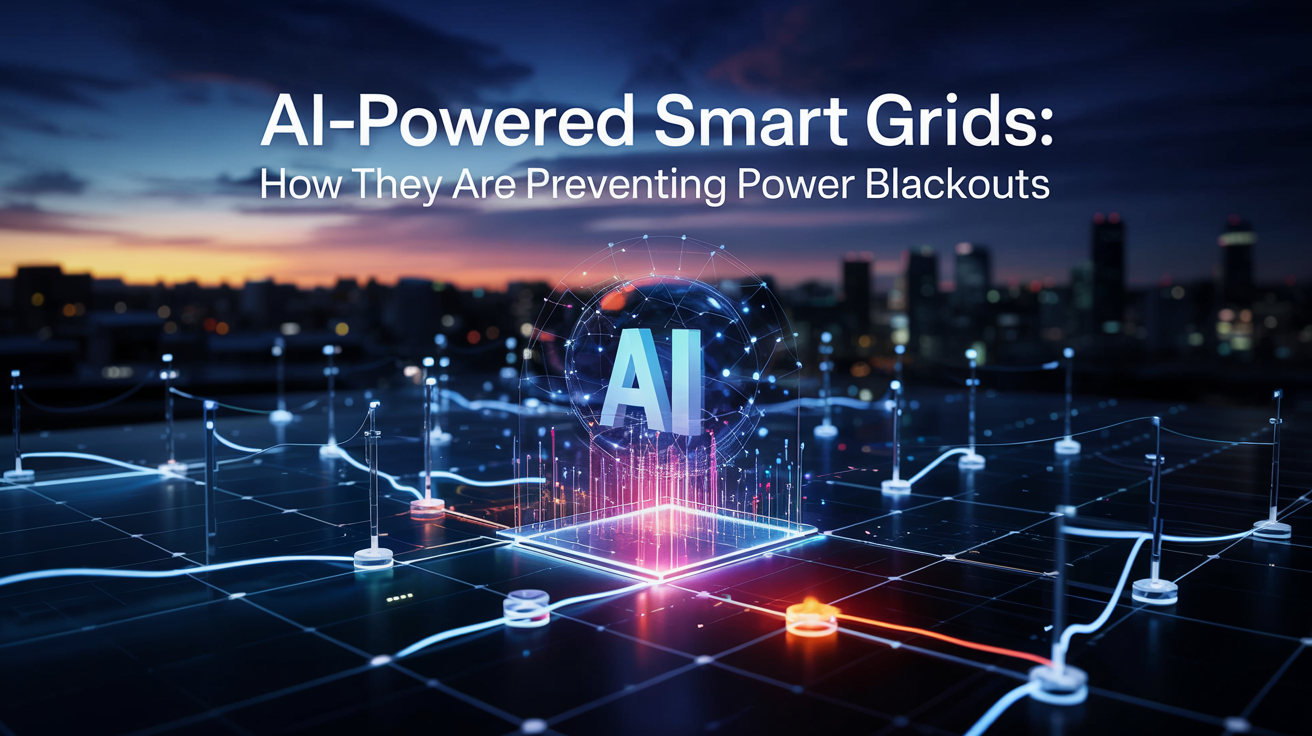
The AI-Managed Smart Grid is becoming an important part of the modern energy transition in 2026. As transportation, heating, cooling, industry, and data centers become increasingly electrified, electricity networks are facing more complicated patterns of supply and demand. Traditional grids were largely designed around predictable demand, but today’s system must respond to electric vehicles, renewable generation, batteries, heat pumps, and large digital loads.
An AI-Managed Smart Grid combines sensors, software, automation, forecasting, and artificial intelligence to help utilities understand what is happening across the network and respond more quickly. Instead of relying only on fixed schedules and manual decisions, digital systems can analyze large quantities of data and help operators anticipate changes in electricity demand, renewable generation, congestion, and equipment conditions.
The International Energy Agency says grids are emerging as a bottleneck for connecting new generation, storage, and demand, while digital technologies such as AI can help utilities make better use of existing infrastructure.
Table of Contents
- What Is an AI-Managed Smart Grid?
- Why AI-Managed Smart Grid Technology Matters in 2026
- AI Forecasting and Real-Time Grid Management
- AI-Managed Smart Grid and Electric Vehicles
- Vehicle-to-Grid Integration
- Renewable Energy and AI-Managed Smart Grid Systems
- AI Grid Optimization and Demand Response
- Cybersecurity and AI-Managed Smart Grid Infrastructure
- AI-Managed Smart Grid Challenges
- AI-Managed Smart Grid Comparison Table
- AI-Managed Smart Grid Trend Graph
- The Future of AI-Managed Smart Grid Technology
- Final Thoughts
What Is an AI-Managed Smart Grid?
An AI-Managed Smart Grid is an electricity network that uses digital technologies and artificial intelligence to monitor, forecast, optimize, and sometimes automate parts of grid operation.
Traditional electricity networks depend heavily on centralized generation and scheduled power flows. Smart grids introduce more sensors, connected devices, automated controls, distributed energy resources, and two-way communication.
AI can analyze information from smart meters, substations, weather systems, renewable-energy facilities, batteries, EV chargers, and other connected assets. This can help utilities identify patterns that would be difficult to process manually.
The goal is not necessarily to allow AI to control every part of the electricity network independently. Instead, AI can act as an advanced decision-support and optimization layer while human operators and established grid-control systems remain responsible for critical decisions.
The IEA’s September 2026 report on modernizing grids specifically highlights AI’s potential for forecasting, optimization, situational awareness, resilience, and risk management.
Why AI-Managed Smart Grid Technology Matters in 2026
The need for an AI-Managed Smart Grid is increasing because electricity demand is changing rapidly. Electric vehicles add new charging loads, heat pumps increase electricity demand for heating, data centers create large concentrated loads, and solar and wind generation can vary according to weather conditions.
The IEA reports that more than 2,500 GW of renewable, storage, and large-load projects are currently stalled in grid connection queues worldwide. It also estimates that meeting expected electricity demand through 2030 will require annual grid investment to rise substantially from today’s levels.
Building new transmission and distribution infrastructure remains essential, but digital technologies can help utilities get more value from infrastructure that already exists.
This is one of the strongest reasons the AI-Managed Smart Grid is receiving attention. Instead of treating every congestion problem as a reason to immediately build another line or transformer, advanced monitoring and optimization can sometimes help operators use existing capacity more efficiently.
AI Forecasting and Real-Time Grid Management
One of the most valuable applications of an AI-Managed Smart Grid is forecasting. Electricity demand changes according to weather, time of day, industrial activity, transportation patterns, and consumer behavior.
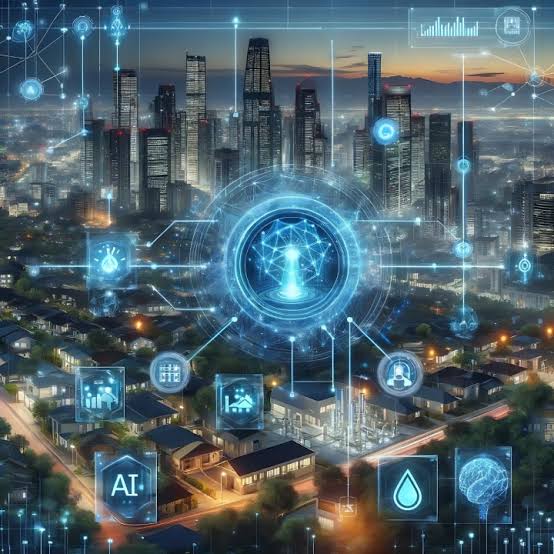
AI models can analyze historical and real-time information to estimate future demand. Weather forecasts can also be combined with electricity data to predict how much solar or wind generation may be available.
More accurate forecasts can help utilities prepare for periods of high demand and avoid unnecessary reserve requirements. They can also help grid operators respond to unexpected changes.
However, the idea that AI can universally predict every electricity surge exactly 15 minutes before it occurs is too specific. Forecasting accuracy depends on the grid, available data, weather conditions, equipment, and the type of event being predicted.
The broader trend is clear: utilities are increasingly using digital tools to improve forecasting and operational awareness. The IEA identifies AI-enhanced forecasting and decision support as important components of modern grid management.
AI-Managed Smart Grid and Electric Vehicles
Electric vehicles are becoming a major component of the AI-Managed Smart Grid because EVs are both electricity consumers and, in some configurations, potential energy-storage resources.
Uncontrolled EV charging can create additional demand during already busy periods. Smart charging can instead shift charging toward times when electricity is cheaper, demand is lower, or renewable generation is abundant.
The IEA’s 2026 analysis notes that residential EV charging can represent a very large household electricity load and that concentrated charging can contribute to congestion and voltage issues. Smart charging and V2G can provide flexibility to help manage these challenges.
An AI-managed system could analyze charging requirements, electricity prices, grid conditions, and renewable generation before deciding when compatible vehicles should charge.
This creates a more flexible relationship between vehicles and the electricity network.
Vehicle-to-Grid Integration
Vehicle-to-Grid, commonly called V2G, is one of the most interesting technologies connected to the AI-Managed Smart Grid. Unlike ordinary charging, V2G allows electricity to flow in both directions when the vehicle and charger support the necessary technology.
During periods of high demand, compatible EVs can potentially send some electricity back to the grid. When demand falls or renewable generation becomes abundant, the vehicles can recharge.
The IEA’s 2026 Global EV Outlook explains that V2G can provide grid-stabilization services and allow EV batteries to function as flexible grid assets. It also notes that widespread deployment requires compatible vehicles and chargers, interoperable communications, regulatory frameworks, and suitable financial incentives.
This means the vision of thousands of EVs acting as a distributed energy resource is technically meaningful, but large-scale implementation still depends on infrastructure and market development.
Renewable Energy and AI-Managed Smart Grid Systems
Solar and wind power make the AI-Managed Smart Grid even more valuable because renewable generation can change according to weather.
Solar output rises during daylight and falls after sunset. Wind generation can also vary considerably. At the same time, electricity demand does not always follow the same pattern.
AI systems can combine renewable-generation forecasts with electricity demand information. This can help operators schedule flexible loads, coordinate batteries, and improve the use of available grid capacity.
For example, an electricity system with abundant midday solar generation could encourage compatible EVs and batteries to charge during that period. Later, when solar output decreases, stored energy can potentially support the system.
The IEA’s 2026 flexibility analysis emphasizes that growing shares of variable renewable generation increase the need for flexible electricity demand and storage.
AI Grid Optimization and Demand Response
Demand response is another important component of the AI-Managed Smart Grid. Instead of treating electricity demand as something utilities can only observe, demand response allows some loads to change their timing or intensity according to grid conditions.
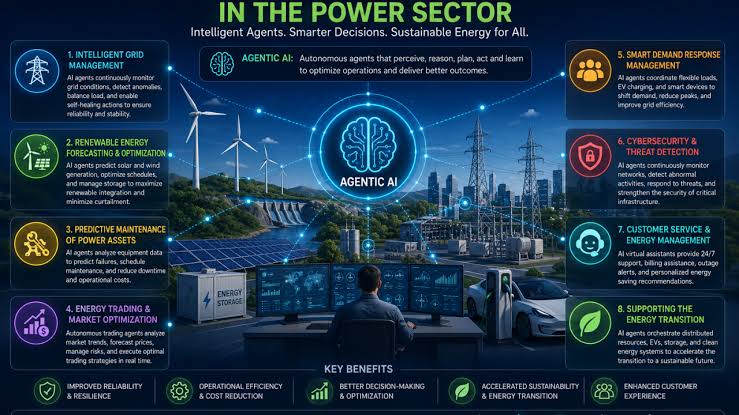
Smart thermostats, EV chargers, industrial equipment, batteries, and other connected devices can potentially participate in these programs.
An AI system could coordinate thousands of flexible devices while attempting to maintain customer comfort and operational requirements. For example, a building’s heating system could slightly adjust its electricity consumption during a short period of grid stress and return to normal operation afterward.
The IEA’s 2026 demand-flexibility report highlights digitalization and connected technologies as important tools for allowing electricity demand to respond to system conditions.
This creates a more dynamic electricity network where flexibility becomes an active resource.
AI-Managed Smart Grid and Battery Storage
Large stationary batteries are also becoming important to the AI-Managed Smart Grid. Grid-scale batteries can store electricity when supply is high and release it when demand rises.
AI can help determine when batteries should charge or discharge by considering electricity prices, demand forecasts, renewable generation, grid congestion, and battery conditions.
The objective is not simply to keep batteries full. A battery can provide greater value when its available capacity is coordinated with expected grid needs.
AI can also help estimate battery health and predict maintenance requirements. Better forecasting can potentially reduce unnecessary battery cycling and improve asset management.
Together, batteries and AI-based controls can create a more flexible electricity system capable of responding to rapidly changing conditions.
Cybersecurity and AI-Managed Smart Grid Infrastructure
Greater digital connectivity also creates new cybersecurity challenges for the AI-Managed Smart Grid. A traditional electrical network already requires strong protection, but adding internet-connected sensors, smart meters, EV chargers, distributed batteries, and automated control systems expands the digital attack surface.
A cyberattack against an ordinary website may affect users of that service. An attack against critical electricity infrastructure can have much broader consequences.
AI can potentially assist with anomaly detection by identifying unusual patterns in network traffic or equipment behavior. However, AI systems themselves must be protected against manipulation, bad data, and adversarial attacks.
For this reason, smart-grid modernization needs cybersecurity to be designed alongside automation rather than added afterward.
AI-Managed Smart Grid Challenges
The AI-Managed Smart Grid has significant potential, but it is not a simple replacement for physical grid investment. Transmission lines, substations, transformers, distribution networks, and generation capacity remain essential.
One major challenge is data quality. AI systems require reliable information, and incorrect sensor data can lead to incorrect recommendations.
Another challenge is interoperability. EV chargers, vehicles, batteries, smart meters, and utility platforms need compatible communication systems if they are expected to operate together.
Consumer participation is also important. EV owners may not want their vehicles discharged whenever the grid needs support. Programs therefore need clear rules, incentives, privacy protections, and guarantees around vehicle availability.
The IEA notes that V2G deployment still faces barriers involving compatible vehicles and chargers, communications protocols, testing, regulation, and incentives.
AI-Managed Smart Grid Comparison Table
| Feature | Traditional Grid | Smart Grid | AI-Managed Smart Grid |
|---|---|---|---|
| Demand forecasting | Conventional models | Digital forecasting | AI-enhanced forecasting |
| EV integration | Mostly passive | Smart charging | Coordinated charging and V2G |
| Renewable integration | More challenging | Improved monitoring | Forecasting and optimization |
| Battery management | Limited automation | Automated controls | Predictive optimization |
| Grid monitoring | Periodic | Connected sensors | Advanced analytics |
| Demand response | Limited | Increasing | Automated coordination |
| Maintenance | Reactive | Condition-based | Predictive analytics |
| Flexibility | Lower | Moderate | Potentially higher |
AI-Managed Smart Grid Trend Graph
The following is a conceptual trend graph, not measured market data. It illustrates the increasing role of digital optimization, flexible demand, EV integration, and storage in modern grid management.
Relative Role of Smart Grid Technologies

Traditional Grid Control     ██████████
Digital Monitoring            █████████████
Smart Charging                ███████████████
Battery Integration           ████████████████
AI Optimization               ██████████████████
V2G Integration               █████████████████
The direction shown is consistent with current IEA analysis, which identifies demand flexibility, storage, digital grid technologies, and AI-enhanced solutions as increasingly important to modern electricity systems.
The Future of AI-Managed Smart Grid Technology
The future of the AI-Managed Smart Grid is likely to involve many small decisions being coordinated across the electricity system.
A household may have solar panels, a home battery, an EV, and a heat pump. A commercial building may have batteries, HVAC systems, and flexible industrial equipment. A utility may need to coordinate all of these resources while balancing large-scale renewable generation and changing demand.
AI can potentially provide the forecasting and optimization layer that connects these resources.
V2G could become especially important if compatible EVs and bidirectional chargers become widespread. Instead of treating every parked EV simply as a load, utilities could potentially coordinate some of those batteries as flexible resources.
However, this future will require standards, cybersecurity, customer participation, suitable electricity-market rules, and reliable communications.
The IEA’s 2026 analysis describes demand-side flexibility as an increasingly important way to manage rising electricity demand and integrate renewable generation.
Final Thoughts on AI-Managed Smart Grid
The AI-Managed Smart Grid represents a shift from a relatively passive electricity network toward a more connected, flexible, and data-driven system.
AI can help utilities improve forecasting, identify congestion, optimize resources, and make better use of existing infrastructure. EVs add another major opportunity because smart charging and V2G can turn transportation batteries into flexible electricity resources when the technology and market structure allow it.
The transition will not happen through AI alone. Physical grid expansion remains essential, and successful deployment also requires cybersecurity, interoperable technology, regulatory support, consumer participation, and investment.
Still, the direction of the electricity sector is becoming clear. As more vehicles, buildings, industries, batteries, and renewable-energy systems connect to the grid, intelligent coordination will become increasingly valuable.
In 2026, the AI-Managed Smart Grid is not simply about making electricity networks smarter. It is about creating a system where generation, consumption, storage, and flexible demand can work together more efficiently.
 administratoir16