
Why SMR Energy for AI Matters in 2026
The rapid expansion of artificial intelligence is creating an enormous demand for electricity, making SMR Energy for AI an increasingly discussed solution for future data centers. Data centers consumed around 415 TWh of electricity globally in 2024, equal to about 1.5% of worldwide electricity consumption, and the IEA expects global data-center electricity use to more than double by 2030 in its base case.
This growing demand is pushing technology companies to explore reliable sources of electricity alongside traditional grid power, solar, wind, storage, natural gas, and existing nuclear plants. Google, Microsoft, Amazon and other major technology companies have announced nuclear-related agreements or investments, showing that nuclear energy is becoming part of the broader conversation around AI infrastructure.
Small Modular Reactors, commonly called SMRs, are particularly interesting because their smaller design could potentially allow nuclear capacity to be deployed in a more modular way. However, most new SMR projects are still under development, meaning their ability to supply large AI campuses at scale will depend on licensing, construction, financing, and deployment timelines.
Table of Contents
- SMR Energy for AI and Rising Data Center Demand
- SMR Energy for AI and Reliable Baseload Power
- SMR Energy for AI and Small Modular Reactor Design
- SMR Energy for AI and Big Tech Investments
- SMR Energy for AI and Renewable Energy
- SMR Energy for AI and Grid Challenges
- SMR Energy for AI and Carbon Reduction
- SMR Energy for AI and Future Data Centers
- Conclusion
SMR Energy for AI and Rising Data Center Demand
The first major reason behind interest in SMR Energy for AI is the extraordinary growth of data-center electricity demand. AI training and inference require large numbers of high-performance processors, while those processors also generate significant heat that must be removed through sophisticated cooling systems.
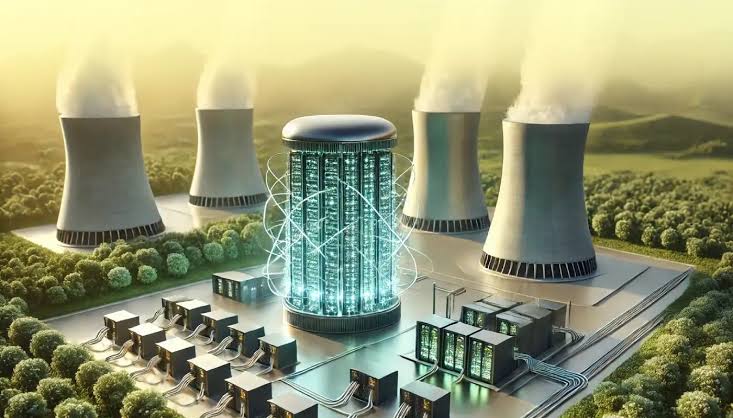
The IEA reported that global data-center electricity consumption increased by 17% in 2025, while electricity consumption from AI-focused data centers increased even faster, by about 50%. This illustrates why electricity availability is becoming a major infrastructure issue for the technology industry.
The challenge is also highly concentrated. A data center may require hundreds of megawatts in one location, creating local grid constraints even when a country’s overall electricity supply appears sufficient.
This is one reason SMR Energy for AI is attracting attention. A reactor located close to a major electricity demand center could potentially provide a steady supply of power, although actual deployment depends on regulatory and technical requirements.
SMR Energy for AI and Reliable Baseload Power
Reliability is another major reason companies are exploring SMR Energy for AI. AI data centers are designed to operate continuously, meaning they require dependable electricity around the clock.
Solar and wind power are valuable low-carbon sources, but their output varies according to weather and time of day. Battery storage, grid connections, hydroelectricity, natural gas, and nuclear power can complement renewable generation.
Nuclear reactors have traditionally provided steady electricity for long periods. The IEA projects that nuclear power will become increasingly important for meeting data-center electricity demand toward the end of this decade and beyond.
SMRs are being explored as a newer nuclear format. Their smaller scale and modular construction concept could eventually offer different deployment possibilities compared with conventional large nuclear plants.
SMR Energy for AI and Continuous Electricity
The continuous nature of AI workloads makes power reliability particularly important. Training a large model can involve enormous computing resources, while inference services may need to remain available continuously for customers.
A reliable nuclear source could therefore complement renewable generation and reduce dependence on short-term electricity-market conditions.
However, reliability does not automatically mean SMRs are immediately available. New nuclear projects face lengthy development and regulatory processes, so today’s AI power shortage cannot simply be solved by reactors that may not be operational for several years.
SMR Energy for AI and Small Modular Reactor Design
The technology behind SMR Energy for AI is based on the idea of building smaller nuclear reactors compared with traditional large-scale plants. Many SMR concepts are designed around standardized components and modular construction.
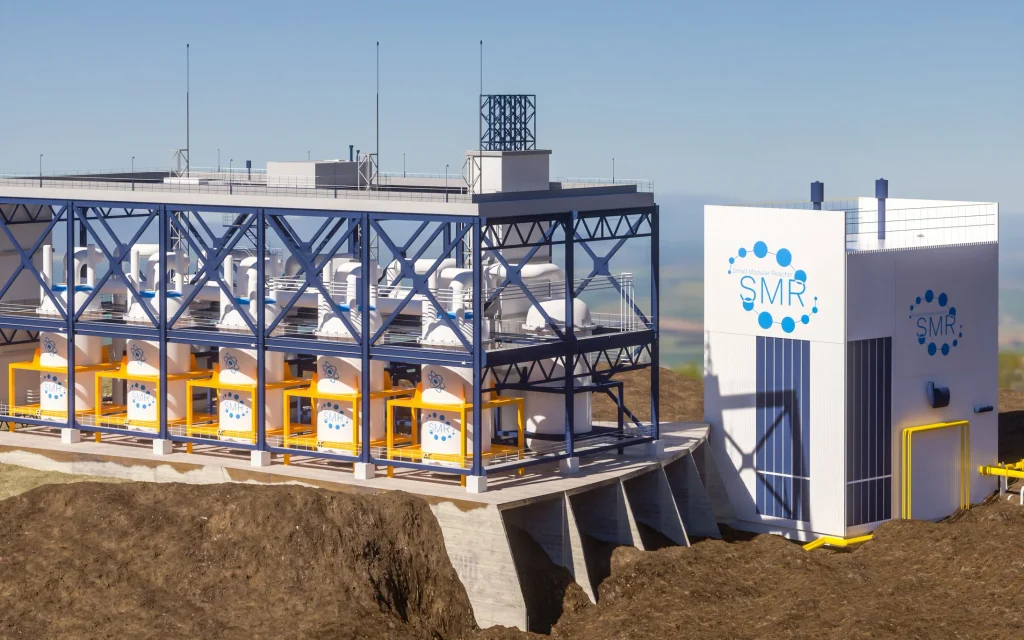
The theoretical advantage is that factories could produce components in a more repeatable process before transporting them to a site. In principle, this could reduce some construction complexity, although real-world costs and timelines remain uncertain because many designs have not yet reached commercial scale.
The technology sector is already connected to several advanced nuclear projects. Google has partnered with Kairos Power around advanced reactors, while Amazon has announced investments and agreements involving nuclear energy and SMR developer X-energy.
These projects demonstrate strong commercial interest, but they should not be confused with large numbers of operating SMRs already supplying AI data centers.
SMR Energy for AI and Big Tech Investments
Big technology companies are becoming important participants in the emerging SMR Energy for AI market. Instead of waiting entirely for traditional utilities to expand generation, technology companies are increasingly signing long-term agreements, supporting reactor developers, or contracting for future nuclear capacity.
Google’s nuclear strategy includes a 500-MW advanced-reactor partnership with Kairos Power, while Amazon has announced nuclear-related investments involving X-energy. Microsoft has also pursued nuclear power through an agreement connected with the restart of the Three Mile Island Unit 1 facility.
These examples reveal an important change in the relationship between technology and energy. Data-center companies are no longer simply electricity consumers. Some are becoming major participants in energy infrastructure planning.
SMR Energy for AI and Renewable Energy
The growth of SMR Energy for AI does not necessarily mean renewable energy will become less important. In fact, renewables are expected to supply a large share of the additional electricity required by data centers.
The IEA estimates that renewables could meet nearly half of the additional electricity demand from data centers through 2030, while natural gas and nuclear also contribute to the supply mix.
This suggests that the future electricity system is likely to be diverse. Solar and wind can provide low-cost generation when conditions are favorable, while nuclear can provide steady output. Batteries and flexible data-center operations can help manage periods when renewable production changes.
SMR Energy for AI and a Mixed Power Strategy
A mixed energy strategy could become particularly important for large technology campuses. Rather than depending on one generation source, companies may combine grid electricity, renewable contracts, storage, existing nuclear generation and future advanced reactors.
This approach could provide greater flexibility while reducing the risks associated with depending entirely on one technology.
SMR Energy for AI and Grid Challenges
The need for SMR Energy for AI is partly driven by a fundamental problem: electricity infrastructure takes time to build.
A new data center can potentially be planned and constructed faster than major transmission lines, substations, power plants, or other infrastructure needed to support it. This creates a mismatch between the speed of AI development and the speed of energy infrastructure development.
The IEA expects global data-center electricity consumption to approach 950 TWh by 2030 in its base case.
The graph below shows the IEA’s broader data-center electricity outlook. It represents total data-center electricity demand, not SMR generation.
This rising demand explains why SMR Energy for AI is being discussed alongside grid expansion, renewable energy, storage, and existing nuclear capacity.
SMR Energy for AI and Carbon Reduction
Another potential benefit of SMR Energy for AI is the possibility of supplying electricity with low operational carbon emissions. Nuclear power produces electricity without directly burning fossil fuels during generation.
For technology companies with ambitious emissions goals, reliable low-carbon electricity can be valuable. However, the overall environmental impact of nuclear energy also depends on factors such as construction, fuel production, waste management, cooling requirements, and the specific reactor design.
It is therefore more accurate to describe nuclear power as a low-carbon electricity source rather than completely impact-free energy.
The IEA expects nuclear power to play a growing role in meeting data-center demand, particularly toward the end of this decade and beyond.
SMR Energy for AI and Deployment Challenges
Despite the attention surrounding SMR Energy for AI, deployment remains one of the biggest challenges. New reactor technologies must pass regulatory reviews, secure financing, establish supply chains, and demonstrate reliable operation.
Some industry observers expect initial SMR projects to arrive near the end of the 2020s or later, rather than immediately solving today’s data-center electricity requirements.
This timing issue is important because AI infrastructure is expanding now. Existing nuclear plants, grid connections, renewable projects, natural gas generation, batteries, and demand-management systems may therefore remain important while new SMRs move through development.
SMR Energy for AI and Future Data Centers
The long-term potential of SMR Energy for AI depends on whether advanced reactors can become commercially competitive and deployable at meaningful scale.
If developers can achieve predictable construction schedules, competitive costs, strong safety performance, and regulatory approval, SMRs could become one component of future data-center energy strategies.
Technology companies are already exploring several approaches. Some are pursuing new reactors, while others are contracting for electricity from existing or restarted nuclear facilities. Recent agreements involving Google, Microsoft, Amazon and other companies show that nuclear energy is becoming a serious part of long-term data-center planning.
SMR Energy for AI Compared With Other Power Sources
| Energy Source | Reliability | Carbon Profile | AI Data Center Potential |
|---|---|---|---|
| SMRs | High potential | Low operational carbon | Emerging |
| Large Nuclear | High | Low operational carbon | Established potential |
| Solar | Variable | Low | High with storage/grid support |
| Wind | Variable | Low | High with grid support |
| Natural Gas | High | Higher emissions | Widely available |
| Battery Storage | Depends on charging source | Depends on source | Important support technology |
This comparison shows why SMR Energy for AI should be viewed as part of a wider electricity strategy rather than a single replacement for every other power source.
SMR Energy for AI and the Intelligence Economy
The growth of AI is creating a new connection between computing infrastructure and physical energy infrastructure. Chips, cooling systems, buildings, transmission networks and power plants are all becoming part of the AI supply chain.
The rise of SMR Energy for AI reflects this transformation. The future of artificial intelligence will depend not only on better models and faster processors but also on whether enough electricity can be generated and delivered where it is needed.
At the same time, energy efficiency remains important. The IEA notes that energy use per AI task has been falling rapidly as hardware and software improve, although the rapid expansion of AI applications can offset some of those efficiency gains.
This means the long-term solution will likely combine more efficient computing with additional electricity generation and better grid infrastructure.
Conclusion: SMR Energy for AI Could Reshape Data Center Power
SMR Energy for AI is emerging as a significant part of the conversation around the future of data-center electricity. The attraction is understandable: AI facilities need reliable power, nuclear generation can provide steady low-carbon electricity, and advanced SMRs are designed around a potentially more modular approach to nuclear construction.
But SMRs are not an instant solution, and they are not the only technology capable of supporting AI’s growing energy requirements. Renewable energy, existing nuclear plants, natural gas, batteries, grid expansion, and improved efficiency will all remain important.
The biggest change is that technology companies are becoming increasingly involved in energy infrastructure decisions. As AI demand continues to grow, SMR Energy for AI could become an important part of a broader strategy designed to provide reliable electricity without relying on a single source.
The next few years will reveal whether advanced reactors can move from ambitious projects to commercially deployed power sources for the expanding AI economy.
 administratoir16